
- Area
- County Durham
- Postcode district
- DH1
- Nation
- England
- Guide price
- From £90 inc VAT
- Visit
- Rate agreed in advance
What to know about heat pump repairs in Durham
Aftercare matters as much as installation. For a heat pump in Durham the visit checks the outdoor unit, the water circuit and the controls, and the engineer explains any settings that would help the system run more efficiently.
For repeated faults in Durham, the engineer looks at the system design as well as the failed part. We repair heat pumps in Durham whoever installed them, including older monobloc and split systems.
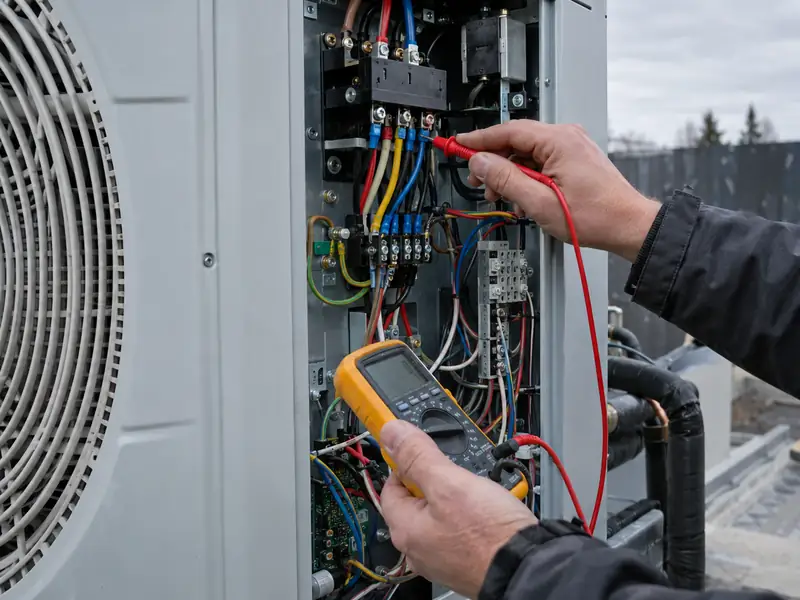
When a heat pump shows an error, loses pressure or stops heating, an engineer diagnoses the cause and explains the repair and its cost before fixing it.
- Rooms or hot water not getting warm enough
- Systems losing pressure or needing frequent topping up
- Heat pumps showing an error code or fault light
What's included
- Refrigerant repairs by an F-gas certified engineer where needed
- Testing of sensors, pumps, valves, pressures and electrics
- Reading of error history and operating data
- Supply and fitting of replacement parts
- Fault-finding visit at a rate agreed before attending
Repairs in Durham that need a part ordered are explained and priced before the engineer leaves.
Grants and rules for heat pumps in England
In England the Boiler Upgrade Scheme gives £7,500 towards an air source heat pump (£9,000 if it replaces oil or LPG, from 21 July 2026 to 31 March 2027), and since 28 April 2026 a valid EPC is no longer needed. The grant is applied for by the MCS-certified installer and shown as a deduction on your Durham quote.
Guide prices for heat pump repairs in Durham
Guide prices for County Durham, including VAT. We agree the visit rate before anyone attends, so there are no surprises on the day.
| Repair | Guide price |
|---|---|
| Fault-finding visit and diagnosis | £90–£170 |
| Sensor or thermistor replacement | £120–£270 |
| Expansion vessel or pressure relief valve | £150–£340 |
| Circulating pump replacement | £240–£470 |
| Fan motor replacement | £290–£630 |
| Refrigerant leak repair and re-gas (split systems) | £340–£920 |
| Main control board (PCB) replacement | £440–£1,050 |
Inc VAT. The fault-finding rate is agreed before we attend; repairs are priced in writing before parts are ordered.
How long is the heating season in Durham?
On the shortest day Durham gets only about 7 hours 13 minutes of daylight and the noon sun sits around 12° above the horizon. Northern winters tend to be longer, so a well-designed, efficient system matters more here because it runs for more of the year.
Booking a visit in Durham
- Tell us the make if you know it, the error code or symptoms, and send photos of the unit and controller.
- We confirm the fault-finding rate and arrange a visit in Durham.
- The engineer diagnoses the fault and gives you a written price for the repair.
- Parts are ordered once you agree, and the repair is completed and tested.
Heat pump repairs in Durham: questions
How much does a visit cost in Durham?
The rate for a service or fault-finding visit is agreed before anyone attends. Any repair is priced in writing before parts are ordered, so you decide before work goes ahead.
Will the engineer need access indoors as well as outside?
Usually yes. The outdoor unit, the hot water cylinder, the controls and the pipework and valves indoors are all part of the visit, so allow access to each.
Do you also cover Chester-le-Street?
Yes. We arrange heat pump servicing and repairs in Chester-le-Street, which is about 6 miles north of Durham, and across County Durham.
Is ice on my heat pump a fault?
Some frost on the outdoor unit in cold, damp weather is normal, and the unit clears it with regular defrost cycles, often releasing a little vapour. It becomes a fault when thick ice builds up and does not clear, or when ice blocks the fan. That can point to poor airflow, a failed sensor, drainage problems or low refrigerant, and needs checking.
Why is my heat pump showing an error code?
An error code is the heat pump's way of reporting a problem it has detected, such as low water flow, a sensor reading out of range or a communication fault between units. Note the code and check the manual, as some codes clear after a simple reset or pressure top-up. If it returns, an engineer can trace the underlying cause.