
- Guide price
- From £9,500 inc VAT
- Survey
- Free home survey for installation enquiries
- Coverage
- England, Wales, Scotland and Northern Ireland
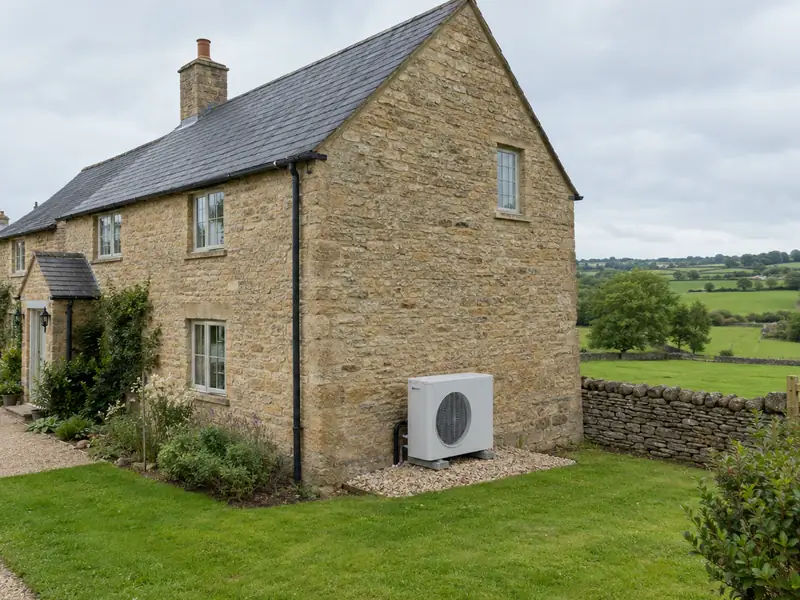
Oil and LPG boiler replacement means swapping a boiler that burns delivered fuel for an air-to-water heat pump running on electricity, then decommissioning the fuel tank. Homes off the gas grid are often rural, detached or older, so they tend to lose more heat than a typical suburban house. That makes careful heat loss design especially important, but it also means there is usually space outside for the unit.
Switching removes fuel deliveries, tank checks and the price swings that come with buying oil or LPG in bulk. In England and Wales, the Boiler Upgrade Scheme pays a higher grant of £9,000 when a heat pump replaces oil or LPG heating, for installations from 21 July 2026 to 31 March 2027; outside that window the standard £7,500 applies. In Scotland, Home Energy Scotland funding can include an extra amount for eligible rural and island homes.
We plan the whole change: the heat pump, cylinder and radiators, and what happens to the tank. Oil tanks are drained, cleaned and removed or made safe, and leased LPG tanks are usually collected by the supplier that owns them. Your quote sets out which parts are included and who arranges each one, so nothing is left loose at the end.
Who it suits
- Rural and village homes off the mains gas grid
- Detached houses and bungalows with garden space for the unit
- Owners tired of fuel deliveries and tank maintenance
- Older oil boilers nearing the end of their life
- Eligible homes in England and Wales within the higher grant window
Things to consider
- Older solid-wall homes may need insulation or draught-proofing to keep the unit size practical.
- Higher heat loss can mean a larger unit and more radiator upgrades.
- Rural electricity supplies sometimes need checking with the network operator before a larger unit is connected.
- Leased LPG tanks are covered by your supply contract, which may set notice terms.
- The higher oil and LPG grant applies only in England and Wales, and only for installations within the published dates.
How does the higher grant for oil and LPG homes work?
In England and Wales, the Boiler Upgrade Scheme grant rises to £9,000 when an air-to-water heat pump replaces oil or LPG heating, for installations from 21 July 2026 to 31 March 2027. Outside those dates the standard grant of £7,500 applies.
As with any Boiler Upgrade Scheme job, the MCS-certified installer named in your quote applies to Ofgem and deducts the grant from your price, and Ofgem contacts you to confirm. Since 28 April 2026 a valid EPC is no longer required. In Scotland, Home Energy Scotland offers a grant of up to £7,500 plus up to £1,500 for eligible rural and island homes, with a written offer needed before work starts. Northern Ireland has no dedicated homeowner grant at present.
What happens to the oil or LPG tank?
An oil tank is normally drained of any remaining fuel, cleaned and either taken away or left empty and made safe, depending on its condition and access. Usable oil can sometimes be pumped out by a specialist; old sludge must be disposed of as waste.
LPG tanks are usually owned by the supplier and leased to you, so the supplier collects the tank, often after a notice period set out in your contract. Bottled LPG is simpler, as the cylinders are returned. We confirm at the survey which tank work is in your quote and which you arrange with your supplier.
Can a heat pump heat an older solid-wall house?
Yes, provided the system is designed to the home's real heat loss. Solid-wall cottages and farmhouses usually lose more heat than cavity-walled houses, so the survey records wall thickness, floor construction, windows, ceiling heights and draughts before sizing the unit.
Simple measures such as loft insulation, draught-proofing and secondary glazing can reduce heat loss and the size of unit needed. Larger radiators let the system run at lower flow temperatures. Where changing radiators is difficult, a high-temperature heat pump may suit, with a trade-off in efficiency. Our guide to heat pumps in older homes covers this in more detail.
Will my rural electricity supply cope?
Most rural homes can run a heat pump on their existing single-phase supply. The installer checks your main fuse, consumer unit and the unit's electrical demand, and notifies the electricity network operator where required. Occasionally the network operator needs to assess or upgrade the local supply before a larger unit is connected, which can add time, so we raise it early.
What's included
- Free survey with a detailed heat loss calculation for older construction
- Removal of the oil or LPG boiler and flue
- Oil tank draining and removal or making safe, as set out in your quote
- Help arranging LPG tank collection with your supplier
- Outdoor unit, heat pump cylinder, controls and radiator changes
- Network operator notification and electrical connection
- MCS certificate and grant application in England and Wales where eligible
Oil and LPG boiler replacement guide prices
| Home | Typical size | Installed guide price | After £9,000 grant |
|---|---|---|---|
| 1–2 bedroom flat or small terrace | 4–5 kW | £9,500–£12,500 | £500–£3,500 |
| 2–3 bedroom terrace or semi | 5–7 kW | £10,500–£13,500 | £1,500–£4,500 |
| 3 bedroom semi or small detached | 6–9 kW | £12,000–£15,500 | £3,000–£6,500 |
| 4 bedroom detached | 8–12 kW | £14,000–£18,000 | £5,000–£9,000 |
| 5+ bedroom or larger older house | 11–16 kW | £16,500–£22,500 | £7,500–£13,500 |
Installed, inc VAT: unit, cylinder, controls, minor pipework and commissioning. The £9,000 Boiler Upgrade Scheme figure applies to oil and LPG replacements in England and Wales installed from 21 July 2026 to 31 March 2027.
Replacing an oil or LPG boiler with a heat pump questions
How much is the grant for replacing an oil boiler with a heat pump?
In England and Wales, the Boiler Upgrade Scheme grant is £9,000 when an air-to-water heat pump replaces oil or LPG heating, for installations from 21 July 2026 to 31 March 2027. Otherwise the standard £7,500 applies. The installer claims it and deducts it from your quote. Scotland's Home Energy Scotland funding works differently and includes extra for eligible rural homes; Northern Ireland has no dedicated homeowner scheme at present.
Do I have to remove my oil tank?
Not always, but it should be emptied and made safe. A tank in good condition can be drained, cleaned and left in place, though most owners prefer to have it taken away to free up space. Old or damaged tanks are usually removed. Your quote says which option is included, and any remaining oil and sludge is disposed of properly.
Is a heat pump cheaper to run than oil?
It depends on oil prices, your home's insulation, the flow temperature and your electricity tariff, so there is no single answer. At the October to December 2026 price cap, a heat pump with a seasonal efficiency of 3.0 delivers heat for about 8.8p per kWh, and at 3.5 about 7.5p. Compare that with your oil cost per kWh of heat, allowing for your boiler's efficiency; the survey estimate gives a figure for your home.
Can a heat pump cope with an exposed rural spot?
Yes. Air source heat pumps are designed to keep working well below freezing, and they periodically defrost, giving off a little vapour, which is normal. In exposed locations the installer chooses a sheltered position where possible, raises the unit to clear snow and let defrost water drain, and sizes the system for the local winter design temperature used in the heat loss calculation.
What happens with a leased LPG tank?
Leased LPG tanks belong to the supplier, so the supplier arranges collection. Check your contract for notice periods and any charges before you fix a date. We time the switchover so you are not left without heating, and once the heat pump is commissioned the supplier can empty and remove the tank. Bottled LPG cylinders are simply returned.
Will I need bigger radiators in an older cottage or farmhouse?
Often in some rooms, because thick solid walls and older windows lose more heat, and heat pumps work at lower water temperatures than oil boilers. The survey checks each room. Rooms with high ceilings or large windows are common candidates for a larger radiator. Where swapping radiators is impractical, a high-temperature unit can be considered, with lower efficiency as the trade-off.