
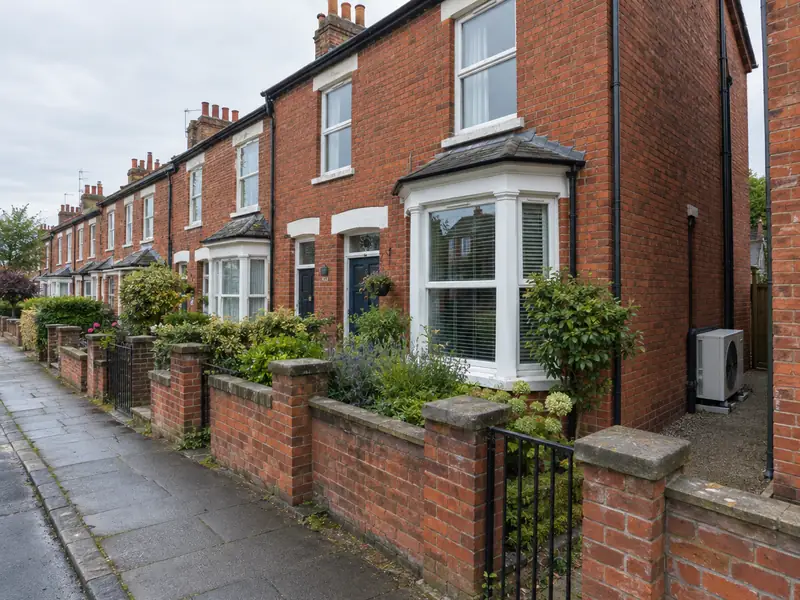
- Guide price
- From £9,500 inc VAT
- Survey
- Free home survey for installation enquiries
- Coverage
- England, Wales, Scotland and Northern Ireland
A heat pump for a let property is a full air source heating and hot water system designed around how tenants use the home, with installation, handover and servicing planned to suit both landlord and tenant. Landlords follow the same survey and design process as owner-occupiers, and in England and Wales they can use the Boiler Upgrade Scheme for their let homes.
Energy efficiency matters in rented homes because each UK nation sets its own rules on the energy performance of let properties, and those rules are being updated. A heat pump can change a property's Energy Performance Certificate (EPC) rating, though the effect depends on insulation, the existing heating and how the assessment is modelled. Check the current standards for your nation with your agent or official guidance; we provide the system details an EPC assessor needs.
Most of the practical work is about people. Tenants need notice of the installation days, access to rooms where radiators change and a simple explanation of how to use the controls. We plan the installation in stages where possible, keep the time without heating and hot water as short as practical, and provide handover notes written for tenants.
Who it suits
- Landlords in England and Wales replacing gas, oil or electric heating in let homes
- Portfolio landlords planning upgrades across several properties
- Properties between tenancies, when access and disruption are easier to manage
- HMOs with high hot water demand that need careful cylinder sizing
- Landlords who want to remove gas appliances from a property
Things to consider
- Installation typically takes 2–4 days, with heating and hot water off for part of that time.
- Flats may need freeholder or management company consent for the outdoor unit and pipe routes.
- In England, flats and some positions may need planning permission; Wales, Scotland and Northern Ireland have their own rules, which we check at survey.
- Tenants need clear guidance, as heat pumps run differently from boilers.
- Annual servicing should be built into your maintenance schedule to protect warranties.
Can landlords get the Boiler Upgrade Scheme?
Yes, in England and Wales landlords can use the Boiler Upgrade Scheme for existing let homes on the same terms as owner-occupiers: £7,500 towards an air-to-water heat pump, or £9,000 when replacing oil or LPG heating for installations from 21 July 2026 to 31 March 2027. The MCS-certified installer applies to Ofgem and deducts the grant, and Ofgem contacts the owner to confirm.
Social housing is not eligible, and nor are homes already funded for a heat pump. In Scotland, check Home Energy Scotland's current criteria for let properties before planning around funding. Northern Ireland has no dedicated heat pump grant at present.
How do you keep disruption low for tenants?
We keep disruption low by agreeing the installation plan with you and your tenants before work starts and keeping the time without heating or hot water as short as practical.
- Written details of dates, working hours and which rooms need access
- Outdoor unit, cylinder and pipework prepared first, so the changeover window is short
- Temporary hot water or heating arrangements discussed where the changeover will take longer
- A tidy finish and a handover sheet that explains the controls in plain terms
Many landlords schedule the work between tenancies or in milder months, when a day or two without heating is easier to manage.
What servicing does a let property need?
A heat pump in a let property should be serviced once a year, which is often a condition of the manufacturer's warranty and helps catch faults before tenants are left without heating. If the system has an unvented cylinder, its safety devices are checked at the same visit. Keep service records with your property files.
Ask tenants not to switch the heat pump off at the outdoor unit, to keep the area around it clear of bins and plants, and to report error codes or a drop in pressure promptly. A short guide kept near the controls helps each new tenant.
What about HMOs and flats?
HMOs and flats need extra planning, mainly around hot water demand and where the outdoor unit can go. In an HMO, several people may shower in the same morning window, so the cylinder needs to be sized for peak demand, sometimes with a larger cylinder or more than one. Heat loss is calculated for each room, and controls are set so shared areas stay as comfortable as bedrooms.
In flats, the outdoor unit may need to go on a balcony, flat roof or communal area, which usually needs consent from the freeholder or management company. In England, flats may also need planning permission; Wales, Scotland and Northern Ireland have their own rules. We check what applies at survey.
What's included
- Survey and room-by-room heat loss calculation for each property
- Written quote showing any Boiler Upgrade Scheme grant (England and Wales)
- Installation plan with dates and access needs you can share with tenants
- Outdoor unit siting and noise check, including flats and shared spaces
- Tenant-friendly handover sheet and controls walkthrough
- MCS certificate and system details for your records and EPC assessor
- Optional annual servicing arranged around your tenancies
Heat pumps for landlords guide prices
| Home | Typical size | Installed guide price | After £7,500 grant |
|---|---|---|---|
| 1–2 bedroom flat or small terrace | 4–5 kW | £9,500–£12,500 | £2,000–£5,000 |
| 2–3 bedroom terrace or semi | 5–7 kW | £10,500–£13,500 | £3,000–£6,000 |
| 3 bedroom semi or small detached | 6–9 kW | £12,000–£15,500 | £4,500–£8,000 |
| 4 bedroom detached | 8–12 kW | £14,000–£18,000 | £6,500–£10,500 |
| 5+ bedroom or larger older house | 11–16 kW | £16,500–£22,500 | £9,000–£15,000 |
Installed, inc VAT: unit, cylinder, controls, minor pipework and commissioning.
Landlords and let properties questions
Can I install a heat pump while tenants are living in the property?
Yes. Most installations typically take 2–4 days on site, with heating and hot water off for part of that time. We agree dates and access with you, provide written details to pass to tenants, and plan the changeover to keep downtime short. Preparing the outdoor unit and cylinder first shortens the period without heating.
Will a heat pump improve my property's EPC rating?
It can, but the effect varies. EPC ratings depend on insulation, glazing, the heating system and how the assessment is modelled, so a heat pump in a poorly insulated home may change the rating less than expected. Check the current letting standards for your nation, and ask an EPC assessor to model the change if the rating matters for your plans.
Can landlords in Scotland get help with heat pump costs?
Home Energy Scotland offers heat pump funding in Scotland, with a grant, a rural and island uplift and an optional interest-free loan. Landlords should check the current criteria for let properties directly with Home Energy Scotland. Any written funding offer must be received before work starts. The Boiler Upgrade Scheme does not cover Scotland.
How much does a heat pump cost for a rental property?
A full air-to-water system for a typical 3 bedroom home has an installed guide price of £12,000–£15,500, including VAT, or £4,500–£8,000 after the standard Boiler Upgrade Scheme grant in England and Wales. Flats and small terraces typically sit at £9,500–£12,500. Your written quote fixes the price after the survey.
Do tenants need training to use a heat pump?
Not training, but a clear explanation helps. Heat pumps are designed to run steadily, with radiators feeling warm rather than hot, so tenants used to boilers may be tempted to switch them off. We provide a handover sheet written for tenants covering the controls, hot water times, what to do if an error appears and why the unit should stay on.
Can a heat pump go on a block of flats or an HMO?
Often, yes, but it needs more planning. In flats, the outdoor unit position and pipe routes usually need freeholder or management company consent, and some positions need planning permission depending on the nation, which we check at survey. In HMOs, hot water demand is higher, so cylinder sizing is critical. Larger buildings may suit a commercial design instead.