
- Guide price
- Priced after survey
- Survey
- Free home survey for installation enquiries
- Coverage
- England, Wales, Scotland and Northern Ireland
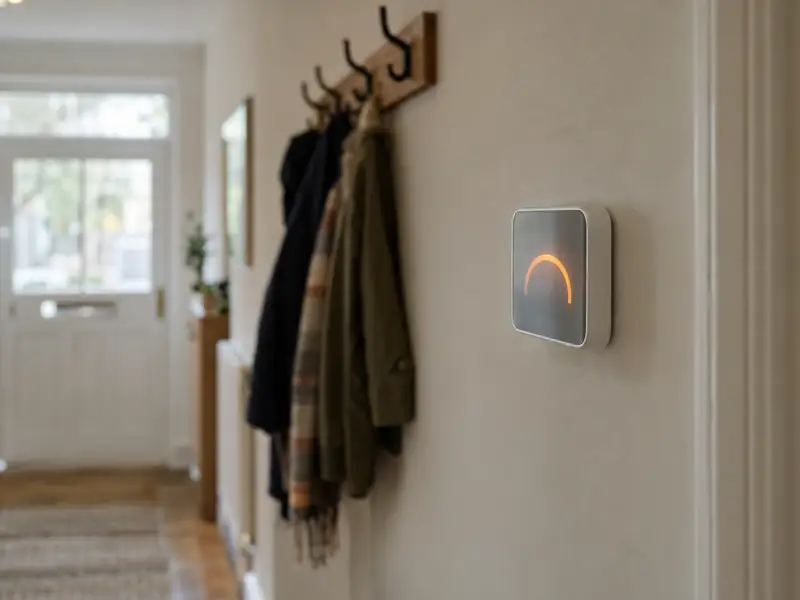
Heat pump controls are the settings and devices that decide how warm the water in your heating is, when the heat pump runs and when it heats hot water. The most important is weather compensation, which raises the flow temperature gradually as it gets colder outside and lowers it in milder weather, so the system only ever runs as warm as it needs to.
Heat pumps work differently from boilers. A boiler typically heats a home in bursts, switching on hard for a few hours in the morning and evening. A heat pump is usually most efficient running 'low and slow': keeping water at a modest temperature for longer and holding rooms at a steady temperature rather than reheating them from cold. Many people find this takes a week or two to get used to.
We set up the controls at commissioning to suit your home and routine, show you how to use them, and explain how a heat pump tariff or time-of-use tariff could fit. Settings can be fine-tuned after the first cold spell, once you have seen how the house responds.
Who it suits
- Every new heat pump installation, set up at commissioning
- Existing heat pumps that feel expensive to run or slow to respond
- Homes with an extension, loft room or areas heated at different times
- Households considering a heat pump or time-of-use electricity tariff
- Homes with solar PV or a battery that want hot water timed to match
Things to consider
- Turning a heat pump right down overnight and up in the morning often uses more electricity, not less.
- Too many separately controlled zones can make the heat pump start and stop often and lose efficiency.
- Tariffs change, and a heat pump or time-of-use tariff suits some households better than others.
- Smart controls need a reliable internet connection for app features, though heating continues without one.
- Fine-tuning weather compensation can take a few weeks of colder weather.
What is weather compensation and why does it matter?
Weather compensation is a control that sets the heat pump's flow temperature from the outdoor temperature, using a sensor outside the house. On a mild day the water might go round at 30–35°C; on a freezing day it rises towards the design flow temperature, such as 45°C. Lower flow temperatures mean higher efficiency, so letting the system run cooler whenever the weather allows can make a noticeable difference across a winter.
The relationship between outside temperature and flow temperature is called the heating curve. We set it from your heat loss design and adjust it if rooms run too warm or too cool in practice.
Do I need room thermostats and zones with a heat pump?
A heat pump system usually needs fewer zones than a boiler system, because it relies on steady, even heating across the house. Many homes run well with one main heating zone controlled by weather compensation, plus a room thermostat in a reference room such as the living room to fine-tune comfort. Thermostatic radiator valves in the main living areas are often left fully open, while bedrooms can be set a little cooler.
Separate zones still make sense where parts of the home are used differently, such as underfloor heating in an extension or a home office heated during the day. The aim is to avoid lots of small zones switching off, which can make the heat pump start and stop frequently.
How should I run a heat pump day to day?
The usual advice is to set your preferred temperature and leave the heat pump to maintain it, rather than switching the heating on and off.
- Keep set-back periods small, such as 1–2°C cooler overnight, rather than switching off.
- Leave the system on during cold spells; reheating a cold house needs a higher flow temperature.
- Heat hot water once or twice a day at set times, ideally when electricity is cheaper or solar is generating.
- Check the heat pump's energy readout or app occasionally to spot changes early.
What are heat pump tariffs?
Heat pump tariffs are electricity tariffs offered by some suppliers that charge less per kWh at certain times or for heat pump use, and they can lower running costs if your system and routine can make use of them. Time-of-use tariffs have cheaper periods, often overnight or in the afternoon, when hot water can be heated and a well-insulated home can be warmed a little in advance.
For context, the Ofgem price cap for October to December 2026 (Great Britain average, Direct Debit) sets electricity at 26.32p per kWh. At a seasonal efficiency (SCOP) of 3.5, a heat pump delivers heat for about 7.5p per kWh, against about 8.9p for a 90% efficient gas boiler, assuming reasonable insulation and a low flow temperature. We do not sell tariffs, but we can set the controls to match the one you choose.
What's included
- Weather compensation set up with a heating curve based on your heat loss design
- Room thermostat or reference-room sensor positioned and configured
- Zoning plan for underfloor heating, extensions or rooms used differently
- Hot water schedule and legionella cycle timed to your routine and tariff
- App or smart control setup where the system supports it
- A walkthrough of the controls and a simple written guide at handover
- Advice on fine-tuning settings after the first cold spell
Prices
Weather-compensating controls and set-up are included in every full system price. See the guide prices for full systems.
Heat pump controls and tariffs questions
Should I turn my heat pump off at night?
Usually not. Switching off lets the house cool, and the heat pump then has to run at a higher flow temperature to recover, which lowers efficiency. A small set-back of 1–2°C overnight is generally more economical. Homes with very good insulation or a time-of-use tariff may suit different patterns, which we can set up.
Can I control my heat pump from my phone?
Many heat pumps offer an app or work with smart thermostats, letting you change temperatures, set schedules and see energy use from your phone. Features vary by make and model, and app control usually needs a reliable internet connection at home. The heating keeps running on its own settings if the connection drops.
What flow temperature should my heat pump run at?
It depends on the design: the flow temperature is set so your radiators or underfloor heating can heat each room on a cold day. Well-designed systems typically run at around 35–50°C at their coldest, and lower in milder weather through weather compensation. Your design paperwork states the design flow temperature, and we set the heating curve to match it.
Is a heat pump tariff a good idea?
A heat pump or time-of-use tariff can lower running costs if your household can shift hot water heating and some space heating into the cheaper periods. Whether it suits you depends on the rates, the standing charge, your routine and whether you have a battery. Compare the total expected cost on your own usage, not only the headline rate.
Why are my radiators only warm, not hot?
That is normal for a heat pump. It heats radiators to a lower temperature than a boiler, so they feel warm rather than hot to the touch, while running longer to keep the room at a steady temperature. If rooms reach the temperature you set, the system is working as designed. If a room stays cold, the settings or radiator size may need checking.
How should I set the hot water on a heat pump?
Most households heat hot water once or twice a day at set times rather than on demand. Timing the main heat for a cheaper tariff period, or for the middle of the day when solar panels generate, helps keep costs down. A weekly legionella cycle raises the water temperature higher, and we schedule it at a sensible time.