
- Guide price
- Priced after survey
- Survey
- Free home survey for installation enquiries
- Coverage
- England, Wales, Scotland and Northern Ireland
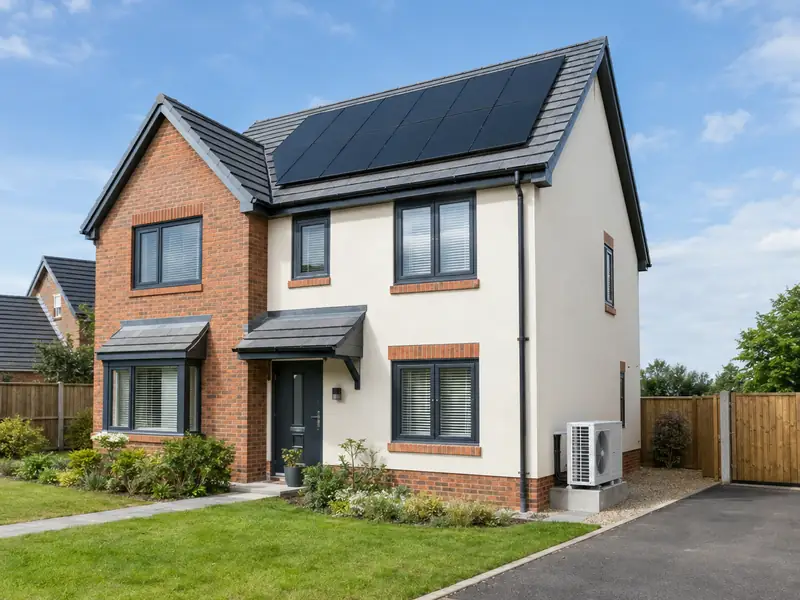
Pairing a heat pump with solar PV means using electricity generated by panels on your roof to run the heat pump, so less is bought from the grid. Solar PV (photovoltaic) panels turn daylight into electricity, and a heat pump is one of the largest electrical loads in an electrically heated home, so the two are often planned together.
It is worth being clear about the seasons. Solar panels generate most from spring to early autumn, when a heat pump is mainly heating hot water. In December and January, when heating demand peaks, a typical roof produces only a small fraction of its summer output and covers little of the heat pump's needs. The strongest fit is daytime hot water heating for much of the year, with a battery or a time-of-use tariff helping in winter.
We design the heat pump first, from the room-by-room heat loss, and then look at how solar and storage could work with it. PV panels and batteries are quoted separately from the heat pump, after a roof survey, and the controls are set so the heat pump makes use of solar generation when it is available. See heat pump controls and tariffs for how timing and tariffs fit in.
Who it suits
- Homes with a roof facing anywhere from east through south to west, with little shading
- Households at home during the day or with flexible hot water timing
- Homeowners planning a heat pump who want to add panels at the same time
- Homes with existing solar PV that currently export much of their output
- Households considering a battery to store daytime or cheaper overnight electricity
Things to consider
- Winter solar output is low, so panels will not run a heat pump through the coldest months.
- Roof condition, structure and shading must be checked before panels are designed.
- Batteries add cost and need space indoors or in a garage, with safe access.
- PV and batteries are quoted separately from the heat pump, with their own survey.
- The electricity network operator may need to be notified, or to approve larger systems, before connection.
Can solar panels power a heat pump?
Solar panels can power a heat pump when they generate enough at the same time the heat pump is running, which happens mostly on bright days from spring to autumn. On those days a modest array can cover the heat pump's hot water heating and some daytime heating. On dull winter days output may be a few kWh or less, so the heat pump draws most of its electricity from the grid or a battery.
Because of this, solar PV is better thought of as reducing the electricity you buy across the year, not as a way to heat your home from the sun alone.
How do you use solar power for hot water?
The simplest way to use solar power for hot water is to schedule the heat pump's main hot water heat for the middle of the day, when panels usually generate most. Some heat pump controllers and solar inverters can also communicate, so the heat pump boosts hot water when surplus solar is detected.
A solar diverter is a device that sends surplus electricity to the cylinder's immersion heater instead of exporting it. With a heat pump, using the heat pump itself for daytime hot water is usually more efficient, because it typically produces around three units of heat for each unit of electricity, while an immersion heater produces one. A diverter can still make sense for top-ups on very sunny days or for the weekly legionella cycle.
Should I add a battery with solar and a heat pump?
A battery stores electricity from your panels, or from the grid at cheaper times, for use later. With a heat pump it can shift daytime solar into the evening, when heating demand rises, and in winter it can charge overnight on a time-of-use tariff to run the heat pump through more expensive periods.
Whether a battery suits you depends on your usage pattern, your tariff and how much solar you export now. It needs space on a wall or floor indoors or in a garage, and its size should be matched to your evening and overnight loads rather than chosen as large as possible.
What does a solar PV survey check?
A solar PV survey checks whether your roof can take panels safely and how much electricity they are likely to generate.
- Roof orientation, pitch and shading from trees, chimneys or nearby buildings
- Roof covering, condition and structure, including access for scaffolding
- Space and a cable route for the inverter and any battery
- Your consumer unit and electrical supply, alongside the heat pump's needs
- Whether the electricity network operator must be notified or must approve the system first
Surplus electricity you export can usually be paid for through a supplier's export tariff, which needs suitable metering; rates vary between suppliers and change over time.
What's included
- Heat pump designed first from a room-by-room heat loss calculation
- Assessment of how solar generation could match your hot water and heating use
- Roof survey for PV, with panels and any battery quoted separately
- Hot water timing set to make use of daytime solar generation
- Advice on diverters, batteries and export arrangements for your home
- Electrical supply check covering the heat pump, inverter and battery together
- Notification to the electricity network operator where required
Prices
Solar panels and batteries are quoted separately after a roof survey. For heat pump system prices see the guide prices.
Heat pumps with solar panels and batteries questions
Can solar panels run my heat pump in winter?
Only partly. In midwinter, solar panels typically generate a small fraction of their summer output, and the shortest days coincide with the highest heating demand. Panels may help on bright winter afternoons, but most winter heating will run on grid electricity or a battery charged from a cheaper overnight tariff. Solar contributes most to hot water from spring to autumn.
How much do solar panels and a battery cost with a heat pump?
Solar PV and batteries are quoted separately from the heat pump, because the price depends on your roof, the number of panels, scaffolding, the inverter and any battery size. We survey the roof and give a written quote for that part of the work. The heat pump itself is priced from its own guide ranges, shown on our prices page.
Should I fit solar panels before or after a heat pump?
Either order works, but planning both together helps. Knowing the heat pump's electricity use helps size the panels and any battery, and the electrical work for both can be coordinated, including the consumer unit and any notification to the network operator. If you already have panels, the heat pump controls can be set to use their output for hot water.
Is a solar diverter useful with a heat pump?
It can be, but less so than with a gas boiler. A diverter heats water through the immersion heater, which turns one unit of electricity into one unit of heat, while a heat pump typically makes around three. Scheduling the heat pump to heat water at midday usually uses solar more efficiently, with a diverter adding top-ups on very sunny days.
Do I need a battery to benefit from solar with a heat pump?
No. Without a battery you can still use solar generation directly by timing hot water heating for the middle of the day. A battery adds flexibility by storing surplus for the evening, or by charging from a cheaper overnight tariff in winter. Whether it suits you depends on how much you would otherwise export and on your tariff.
Can my roof take solar panels?
Most pitched roofs in sound condition can take solar panels, but every roof needs checking. The survey looks at orientation, pitch, shading, roof covering and structure, plus access for scaffolding. Flat roofs can use angled mounting frames. The survey also checks where the inverter and any battery would go and how cables would reach your consumer unit.