
- Guide price
- From £90 inc VAT
- Visit
- Visit rate agreed in advance
- Coverage
- England, Wales, Scotland and Northern Ireland
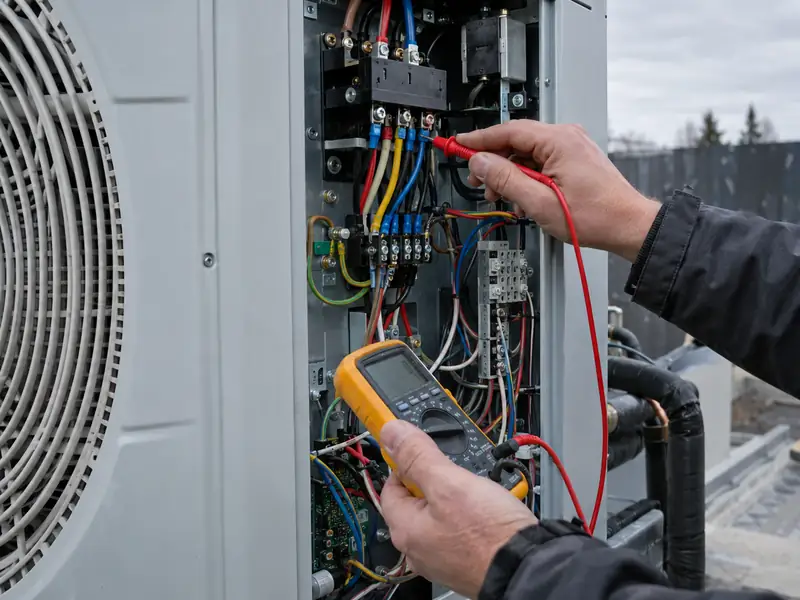
Heat pump repair is the diagnosis and fixing of faults in an air source heat pump, its water circuit, its controls or the hot water cylinder. Many faults have a simple cause, such as low system pressure, a blocked filter or a control setting, while others involve a failed sensor, pump, fan or circuit board.
Every repair starts with a fault-finding visit, which is charged at a rate agreed before we attend. The guide price for a fault-finding visit is £90–£180 for the first hour, including VAT. The engineer reads the error history, tests the system and tells you what has failed, what the repair involves and what it will cost before any further work is done. If a part has to be ordered, you are told the likely wait and the price before you decide.
Typical repairs fall within a guide range of £90–£1,100, including VAT, depending on the part and the time involved. Refrigerant repairs must be done by an F-gas certified engineer. Regular heat pump servicing catches many of these faults before they stop the system working.
Who it suits
- Heat pumps showing an error code or fault light
- Systems losing pressure or needing frequent topping up
- Rooms or hot water not getting warm enough
- Outdoor units that have become noisy, iced up or keep switching on and off
- Heat pumps installed by another company that need a second opinion
Things to consider
- The fault-finding visit is charged even if the fix turns out to be simple.
- Some parts, especially control boards for older or less common models, may need ordering.
- Refrigerant leaks need an F-gas certified engineer and can take longer to trace.
- A recurring fault may point to a design problem, such as oversizing or undersized radiators, rather than a failed part.
- Repairs on systems still under warranty may need to go through the manufacturer or original installer first.
What are the common heat pump faults?
The most common heat pump faults show up as a handful of recognisable symptoms.
- Error codes: the controller displays a code that points to a sensor, flow, pressure or communication problem.
- Low pressure: the system pressure drops, often from a small leak, a failed expansion vessel or a relief valve letting water by.
- Not heating: rooms or hot water stay cool, which can be a control setting, a stuck valve, a failed circulating pump or low water flow.
- Noisy fan: a fan rattling, humming or vibrating more than usual, often from worn bearings, loose mountings or debris.
- Icing: heavy ice that does not clear after a defrost cycle, which can point to airflow, sensor or refrigerant issues.
- Short cycling: the heat pump starts and stops every few minutes, usually from oversizing, low flow or poorly set controls.
What can be repaired?
Most heat pump faults can be repaired by replacing or adjusting a single component rather than the whole unit. Common repairs include temperature sensors and thermistors, expansion vessels and pressure relief valves, circulating pumps, fan motors, diverter valves and main control boards. Water-side leaks, blocked strainers and air in the system are cleared, and the circuit is refilled and treated.
Refrigerant repairs on split systems, such as finding and fixing a leak and re-gassing, must be done by an F-gas certified engineer. Monobloc units keep the refrigerant sealed inside the outdoor unit, so refrigerant leaks are less common; when one does occur, the repair also needs an F-gas certified engineer.
What should I check before calling an engineer?
A few simple checks can sometimes restore heating or save a visit.
- Look at the controller or app for an error code and note it down.
- Check the system pressure gauge; many systems run at around 1–2 bar when cold.
- Make sure the heating and hot water schedules have not been changed and the system is not in holiday mode.
- Check the outdoor unit is not blocked by leaves, snow or stored items.
- See whether a circuit breaker or isolator for the heat pump has tripped.
Do not remove covers from the outdoor unit or attempt anything involving the refrigerant. Top up the water pressure from the filling loop only if you know how and the manufacturer's guide allows it.
Why does my heat pump keep breaking down?
A heat pump that keeps developing faults often has an underlying design or installation problem rather than bad luck. An oversized unit short cycles, which wears the compressor and controls; undersized radiators push the flow temperature up; and poor water quality can block filters and damage pumps. Units sited where they draw back in their own cold air can also ice more than they should.
When we find repeated faults, we explain the likely cause in writing and set out the options, from control changes and water treatment to radiator upgrades or, in some cases, re-sizing the system.
What's included
- Fault-finding visit at a rate agreed before attending
- Reading of error history and operating data
- Testing of sensors, pumps, valves, pressures and electrics
- A clear explanation of the fault and a price for the repair before work goes ahead
- Supply and fitting of replacement parts
- Refrigerant repairs by an F-gas certified engineer where needed
- System refill, venting and recommissioning after the repair
Heat pump repairs guide prices
| Repair | Guide price |
|---|---|
| Fault-finding visit and diagnosis | £90–£180 |
| Sensor or thermistor replacement | £120–£280 |
| Expansion vessel or pressure relief valve | £150–£350 |
| Circulating pump replacement | £250–£480 |
| Fan motor replacement | £300–£650 |
| Refrigerant leak repair and re-gas (split systems) | £350–£950 |
| Main control board (PCB) replacement | £450–£1,100 |
Inc VAT. The fault-finding rate is agreed before we attend; repairs are priced in writing before parts are ordered.
Heat pump repairs questions
How much does a heat pump repair cost?
Heat pump repairs have a typical range of £90–£1,100, including VAT, depending on the part and labour involved. Sensor replacements sit at the lower end, while control boards and refrigerant repairs on split systems sit higher. Every repair starts with a fault-finding visit, with a guide price of £90–£180 for the first hour, and the repair is priced before work goes ahead.
Why is my heat pump showing an error code?
An error code is the heat pump's way of reporting a problem it has detected, such as low water flow, a sensor reading out of range or a communication fault between units. Note the code and check the manual, as some codes clear after a simple reset or pressure top-up. If it returns, an engineer can trace the underlying cause.
Is ice on my heat pump a fault?
Some frost on the outdoor unit in cold, damp weather is normal, and the unit clears it with regular defrost cycles, often releasing a little vapour. It becomes a fault when thick ice builds up and does not clear, or when ice blocks the fan. That can point to poor airflow, a failed sensor, drainage problems or low refrigerant, and needs checking.
Why does my heat pump keep switching on and off?
Frequent starting and stopping, called short cycling, is usually caused by an oversized heat pump, low water flow, too many zones closing at once or controls set with too narrow a range. It reduces efficiency and wears components. An engineer can check the settings, flow rates and design, and can often improve it with control changes before any parts are needed.
Can you repair a heat pump installed by another company?
Yes. We carry out fault-finding and repairs on heat pumps installed by other companies, including monobloc and split systems. Tell us the make, model and approximate age when you get in touch, plus any error code shown. If the system is still under the manufacturer's warranty, it may be quicker to contact the original installer or manufacturer first.
Do refrigerant repairs need a specialist?
Yes. Any work on a heat pump's refrigerant circuit, such as tracing a leak, replacing a component or re-gassing, must by law be done by an F-gas certified engineer where the refrigerant is fluorinated, such as R32; units using R290 (propane) need an engineer trained in flammable refrigerants. On split systems the refrigerant runs through pipes inside your home, so leaks there are more likely than on sealed monobloc units.