- Guide price
- From £2,400 inc VAT
- Survey
- Free home survey for installation enquiries
- Coverage
- England, Wales, Scotland and Northern Ireland
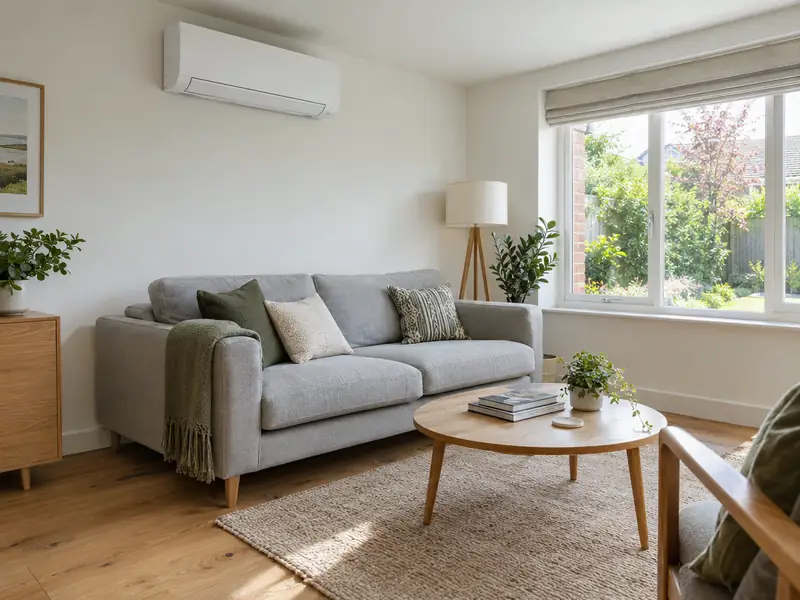
An air-to-air heat pump takes heat from the outside air and delivers it straight into rooms as warm air through indoor units, usually mounted high on a wall. The same system can run in reverse to cool rooms in summer. Unlike an air-to-water heat pump, it does not use radiators or underfloor heating and does not heat a hot water cylinder.
That makes it a practical fit for homes and spaces without a wet heating system: flats on storage or panel heaters, extensions and garden rooms, open-plan living areas, and homes where installing radiators and pipework would be very disruptive. One outdoor unit can serve a single indoor unit, or several rooms through a multi-split system, with each room controlled separately.
Hot water has to come from elsewhere, such as an existing immersion cylinder, an electric water heater or a separate hot water heat pump. In England and Wales, the Boiler Upgrade Scheme now includes a grant of £2,500 for air-to-air heat pumps in homes, from 28 April 2026, subject to the scheme's conditions. The installer must be MCS-certified to apply, and the refrigerant work must be done by an F-gas certified engineer.
Who it suits
- Flats and apartments with storage or panel heaters
- Extensions, conservatories and garden rooms
- Homes where fitting radiators and pipework would be very disruptive
- Rooms that get too hot in summer as well as cold in winter
- Households that already have, or will add, a separate source of hot water
Things to consider
- Air-to-air systems do not heat water, so you need a separate hot water solution.
- Warm air feels different from radiator heat, and the indoor units are visible on the wall.
- Each indoor unit needs a condensate drain and a refrigerant route to the outdoor unit.
- Filters in the indoor units need regular cleaning to keep them working well.
- The Boiler Upgrade Scheme air-to-air grant covers England and Wales only, with conditions.
How does an air-to-air heat pump heat a home?
An air-to-air system moves heat from the outdoor unit to indoor units through refrigerant pipes. Each indoor unit has a fan that blows room air across a warm coil, heating the room quickly. In summer the cycle reverses to take heat out, cooling and dehumidifying the room.
Indoor units are usually wall-mounted high up, though floor-standing and ceiling cassette types exist. Because the units heat air directly, rooms warm up faster than with low-temperature radiators, and each room has its own setting.
Where will my hot water come from?
An air-to-air heat pump only heats and cools air, so hot water needs its own source. Common options are:
- Keeping an existing cylinder with an immersion heater, ideally on an off-peak tariff
- A hot water heat pump, which is a cylinder with its own small heat pump
- An electric water heater for a flat or annexe with low demand
- Keeping an existing boiler for hot water only, if you have one
The survey looks at how much hot water your household uses and which option fits. Hot water running costs differ between these options, so they are part of the running cost estimate.
How does the air-to-air grant work?
In England and Wales, the Boiler Upgrade Scheme includes a grant of £2,500 for air-to-air heat pumps in homes, from 28 April 2026. As with air-to-water systems, the MCS-certified installer named in your quote applies to Ofgem and deducts the grant, and Ofgem contacts you to confirm. Scheme conditions apply, which we check at survey.
The scheme does not cover Scotland or Northern Ireland. In Scotland, Home Energy Scotland funding has its own rules; Northern Ireland has no dedicated homeowner heat pump grant at present.
What does an air-to-air system cost?
As guide prices, installed and including VAT, an air-to-air system for one or two rooms is £2,400–£5,000, and a multi-room system for a three-to-four-bedroom home is £4,000–£8,000. Prices depend on the number and type of indoor units, the length of the pipe routes and where the outdoor unit goes. Your final price is fixed in a written quote after the survey.
What's included
- Free survey covering rooms to heat, unit positions and hot water options
- Outdoor unit and indoor units for each room
- Refrigerant pipe runs to each indoor unit, made and charged by an F-gas certified engineer
- Condensate drains and neat external pipe covers
- Electrical supply and controls set up for each room
- Commissioning, MCS certificate and the air-to-air grant claim in England and Wales where eligible
Air-to-air heat pumps guide prices
| System | Installed guide price |
|---|---|
| Air-to-air heat pump, 1–2 rooms | £2,400–£5,000 |
| Air-to-air heat pump, multi-room 3–4 bedroom home | £4,000–£8,000 |
Installed, inc VAT. Air-to-air systems heat (and can cool) rooms but do not provide hot water. In England and Wales the Boiler Upgrade Scheme gives £2,500 towards an air-to-air system in a home, deducted from your quote where eligible.
Air-to-air heat pumps questions
Can an air-to-air heat pump heat my water?
No. An air-to-air heat pump heats and cools the air in rooms but does not produce hot water. You need a separate source, such as an existing immersion cylinder, a hot water heat pump or an electric water heater. If you want one system for heating and hot water, an air-to-water heat pump with a cylinder is the alternative.
Is there a grant for air-to-air heat pumps?
In England and Wales, yes: the Boiler Upgrade Scheme includes a grant of £2,500 for air-to-air heat pumps in homes, from 28 April 2026. The MCS-certified installer applies to Ofgem and deducts it from your quote, subject to the scheme's conditions. The scheme does not cover Scotland or Northern Ireland; in Scotland, Home Energy Scotland has its own rules.
Can air-to-air heat pumps cool as well as heat?
Yes. Most air-to-air systems can reverse their cycle to cool and dehumidify rooms in summer, which makes them useful for loft rooms, south-facing extensions and home offices that overheat. Cooling uses electricity, so running costs rise if it is used heavily. You control heating and cooling for each room separately.
Are air-to-air heat pumps suitable for flats?
Often, yes. They need no radiators, pipework or cylinder, so they suit flats heated by storage or panel heaters. You need a position for the outdoor unit, such as a balcony, wall bracket or ground-floor yard, and leaseholders normally need the freeholder's or management company's consent. Planning rules for flats differ by nation, so we check what applies at survey.
How much sound do the indoor units make?
Indoor units are designed to run quietly, with a fan you will hear most when heating or cooling at full output. Lower fan settings and night modes reduce sound in bedrooms. Siting matters for the outdoor unit too: it needs airflow and a position that passes the MCS noise assessment. Ask to see the sound levels of the proposed units at survey.
How do I look after an air-to-air system?
Clean the indoor unit filters regularly, typically every few weeks during heavy use and following the manufacturer's guidance, and keep the outdoor unit clear of leaves and snow. Annual servicing is recommended and is often a condition of the manufacturer's warranty. Any work on the refrigerant circuit must be done by an F-gas certified engineer.