
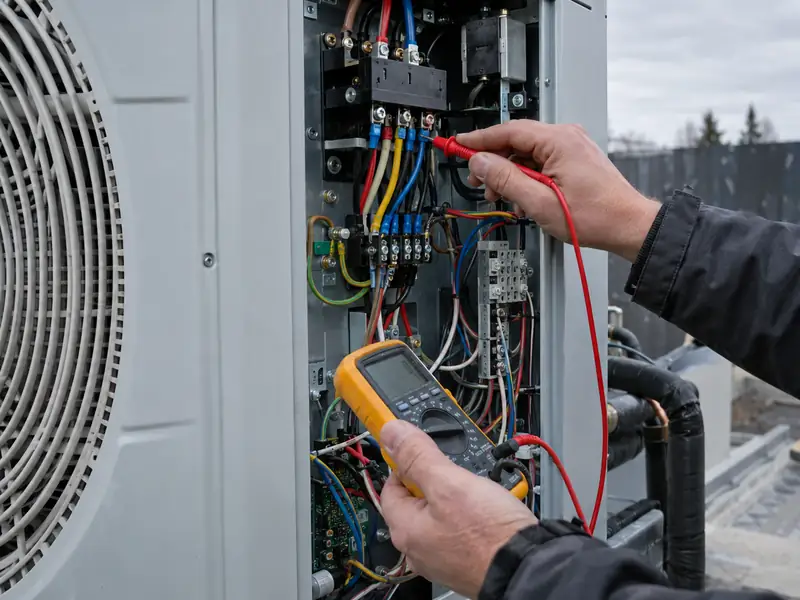
Typical repairs fall within a guide range of £90–£1,100, including VAT, depending on the part and the time involved. Refrigerant repairs must be done by an F-gas certified engineer. Regular heat pump servicing catches many of these faults before they stop the system working.
Outdoor units in exposed spots around Cumbria can ice more heavily, so siting is checked as part of any icing fault. Repairs in Cumbria that need a part ordered are explained and priced before the engineer leaves. Heat pump owners in Cumbria can arrange a fault-finding visit at a rate agreed before an engineer attends.
Who it suits
- Systems losing pressure or needing frequent topping up
- Rooms or hot water not getting warm enough
- Heat pumps showing an error code or fault light
- Heat pumps installed by another company that need a second opinion
Grants and rules for heat pumps in England
Homes in Cumbria can use the Boiler Upgrade Scheme, which takes £7,500 off the cost of an air source heat pump when it replaces fossil-fuel or electric heating. Replacing oil or LPG heating qualifies for £9,000 for installations from 21 July 2026 to 31 March 2027, and air-to-air systems for £2,500. The MCS-certified installer named in your quote applies for the grant and deducts it from the price.
Heat pump repairs prices in Cumbria
These are guide prices including VAT. The rate for your visit in Cumbria is confirmed before we book it, and any repair is priced in writing before parts are ordered.
| Repair | Guide price |
|---|---|
| Fault-finding visit and diagnosis | £90–£180 |
| Sensor or thermistor replacement | £120–£280 |
| Expansion vessel or pressure relief valve | £150–£350 |
| Circulating pump replacement | £250–£480 |
| Fan motor replacement | £300–£650 |
| Refrigerant leak repair and re-gas (split systems) | £350–£950 |
| Main control board (PCB) replacement | £450–£1,100 |
Inc VAT. The fault-finding rate is agreed before we attend; repairs are priced in writing before parts are ordered.
Towns we cover in Cumbria
We cover 10 towns in Cumbria for heat pump repairs. Each links to local guide prices and the grant position for England.
| Town | Postcode district | Nearest town | Midwinter daylight |
|---|---|---|---|
| Carlisle | CA3 | Penrith | 7 h 11 min |
| Barrow-in-Furness | LA14 | Ulverston | 7 h 21 min |
| Kendal | LA9 | Windermere | 7 h 18 min |
| Whitehaven | CA28 | Workington | 7 h 15 min |
| Workington | CA14 | Whitehaven | 7 h 14 min |
| Penrith | CA11 | Keswick | 7 h 14 min |
| Cockermouth | CA13 | Workington | 7 h 14 min |
| Keswick | CA12 | Cockermouth | 7 h 15 min |
| Ulverston | LA12 | Barrow-in-Furness | 7 h 20 min |
| Windermere | LA23 | Kendal | 7 h 18 min |
Heat pump repairs questions
Can you repair a heat pump installed by another company?
Yes. We carry out fault-finding and repairs on heat pumps installed by other companies, including monobloc and split systems. Tell us the make, model and approximate age when you get in touch, plus any error code shown. If the system is still under the manufacturer's warranty, it may be quicker to contact the original installer or manufacturer first.
How much does a heat pump repair cost?
Heat pump repairs have a typical range of £90–£1,100, including VAT, depending on the part and labour involved. Sensor replacements sit at the lower end, while control boards and refrigerant repairs on split systems sit higher. Every repair starts with a fault-finding visit, with a guide price of £90–£180 for the first hour, and the repair is priced before work goes ahead.
Why does my heat pump keep switching on and off?
Frequent starting and stopping, called short cycling, is usually caused by an oversized heat pump, low water flow, too many zones closing at once or controls set with too narrow a range. It reduces efficiency and wears components. An engineer can check the settings, flow rates and design, and can often improve it with control changes before any parts are needed.
Do refrigerant repairs need a specialist?
Yes. Any work on a heat pump's refrigerant circuit, such as tracing a leak, replacing a component or re-gassing, must by law be done by an F-gas certified engineer where the refrigerant is fluorinated, such as R32; units using R290 (propane) need an engineer trained in flammable refrigerants. On split systems the refrigerant runs through pipes inside your home, so leaks there are more likely than on sealed monobloc units.