
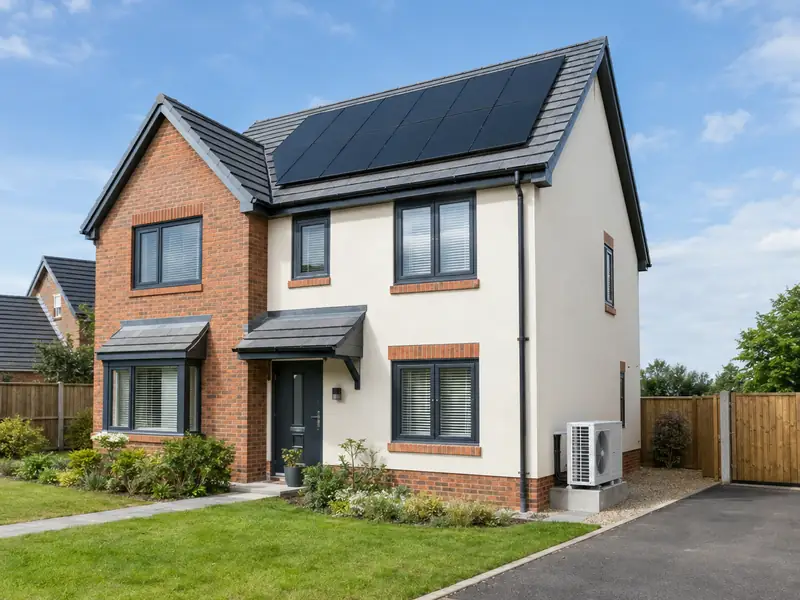
Pairing a heat pump with solar PV means using electricity generated by panels on your roof to run the heat pump, so less is bought from the grid. Solar PV (photovoltaic) panels turn daylight into electricity, and a heat pump is one of the largest electrical loads in an electrically heated home, so the two are often planned together.
We plan heat pump and solar electrics together for Renfrewshire and Inverclyde homes so the consumer unit is upgraded only once. Scaffolding access for solar in Renfrewshire and Inverclyde is checked at the survey, including terraced streets with shared passages. For Renfrewshire and Inverclyde households out during the day, a battery can carry daytime solar into the evening heating period.
Who it suits
- Homes with a roof facing anywhere from east through south to west, with little shading
- Households at home during the day or with flexible hot water timing
- Homeowners planning a heat pump who want to add panels at the same time
- Homes with existing solar PV that currently export much of their output
Grants and rules for heat pumps in Scotland
In Scotland, heat pump funding comes through Home Energy Scotland rather than the Boiler Upgrade Scheme: a grant of up to £7,500 (up to £1,500 extra for eligible rural and island homes) and an optional interest-free loan of up to £7,500. For a home in Renfrewshire and Inverclyde, apply and receive the written offer before the installation date is fixed.
Installing heat pumps is zero-rated for VAT across the UK until 31 March 2027. Scotland has its own permitted development rules for air source heat pumps and its own building standards, so we confirm what applies to your property at survey.
Prices
Solar panels and batteries are quoted separately after a roof survey. For heat pump system prices see the guide prices.
Towns we cover in Renfrewshire and Inverclyde
We cover 10 towns in Renfrewshire and Inverclyde for heat pumps with solar panels and batteries. Each links to local guide prices and the grant position for Scotland.
| Town | Postcode district | Nearest town | Midwinter daylight |
|---|---|---|---|
| Paisley | PA2 | Barrhead | 6 h 59 min |
| Greenock | PA15 | Gourock | 6 h 57 min |
| Newton Mearns | G77 | Barrhead | 7 h 00 min |
| Renfrew | PA4 | Erskine | 6 h 58 min |
| Barrhead | G78 | Paisley | 6 h 59 min |
| Johnstone | PA5 | Bridge of Weir | 6 h 59 min |
| Erskine | PA8 | Renfrew | 6 h 58 min |
| Bridge of Weir | PA11 | Johnstone | 6 h 59 min |
| Gourock | PA19 | Greenock | 6 h 57 min |
| Port Glasgow | PA14 | Greenock | 6 h 58 min |
Heat pumps with solar panels and batteries questions
Do I need a battery to benefit from solar with a heat pump?
No. Without a battery you can still use solar generation directly by timing hot water heating for the middle of the day. A battery adds flexibility by storing surplus for the evening, or by charging from a cheaper overnight tariff in winter. Whether it suits you depends on how much you would otherwise export and on your tariff.
How much do solar panels and a battery cost with a heat pump?
Solar PV and batteries are quoted separately from the heat pump, because the price depends on your roof, the number of panels, scaffolding, the inverter and any battery size. We survey the roof and give a written quote for that part of the work. The heat pump itself is priced from its own guide ranges, shown on our prices page.
Can my roof take solar panels?
Most pitched roofs in sound condition can take solar panels, but every roof needs checking. The survey looks at orientation, pitch, shading, roof covering and structure, plus access for scaffolding. Flat roofs can use angled mounting frames. The survey also checks where the inverter and any battery would go and how cables would reach your consumer unit.
Can solar panels run my heat pump in winter?
Only partly. In midwinter, solar panels typically generate a small fraction of their summer output, and the shortest days coincide with the highest heating demand. Panels may help on bright winter afternoons, but most winter heating will run on grid electricity or a battery charged from a cheaper overnight tariff. Solar contributes most to hot water from spring to autumn.