
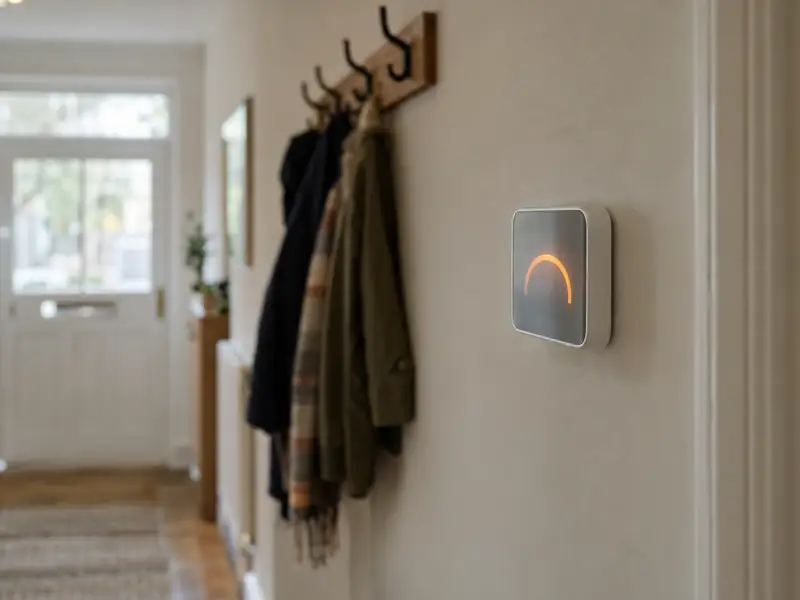
Heat pumps work differently from boilers. A boiler typically heats a home in bursts, switching on hard for a few hours in the morning and evening. A heat pump is usually most efficient running 'low and slow': keeping water at a modest temperature for longer and holding rooms at a steady temperature rather than reheating them from cold. Many people find this takes a week or two to get used to.
We set up weather compensation for each Perth and Kinross home from its own heat loss design, not a factory default. Hot water schedules in Perth and Kinross can be timed to suit shift work, school runs or working from home. Homeowners in Perth and Kinross get a walkthrough of their controls at handover, with a simple written guide to keep.
Who it suits
- Existing heat pumps that feel expensive to run or slow to respond
- Households considering a heat pump or time-of-use electricity tariff
- Homes with solar PV or a battery that want hot water timed to match
- Every new heat pump installation, set up at commissioning
Grants and rules for heat pumps in Scotland
The Boiler Upgrade Scheme does not apply in Scotland. Instead, homeowners in Perth and Kinross can apply to Home Energy Scotland for a grant of up to £7,500 towards a heat pump, with up to £1,500 more for eligible rural and island homes, plus an optional interest-free loan of up to £7,500. You need a written funding offer before any work starts.
There is no VAT on installing a heat pump anywhere in the UK, Scotland included, until 31 March 2027. Scottish permitted development rules and building standards apply, and the surveyor checks the unit position and any listed or conservation-area constraints.
Prices
Weather-compensating controls and set-up are included in every full system price. See the guide prices for full systems.
Towns we cover in Perth and Kinross
We cover 7 towns in Perth and Kinross for heat pump controls and tariffs. Each links to local guide prices and the grant position for Scotland.
| Town | Postcode district | Nearest town | Midwinter daylight |
|---|---|---|---|
| Perth | PH2 | Auchterarder | 6 h 51 min |
| Aberfeldy | PH15 | Pitlochry | 6 h 48 min |
| Auchterarder | PH3 | Crieff | 6 h 53 min |
| Blairgowrie | PH10 | Perth | 6 h 48 min |
| Crieff | PH7 | Auchterarder | 6 h 52 min |
| Kinross | KY13 | Dunfermline | 6 h 54 min |
| Pitlochry | PH16 | Aberfeldy | 6 h 47 min |
Heat pump controls and tariffs questions
What flow temperature should my heat pump run at?
It depends on the design: the flow temperature is set so your radiators or underfloor heating can heat each room on a cold day. Well-designed systems typically run at around 35–50°C at their coldest, and lower in milder weather through weather compensation. Your design paperwork states the design flow temperature, and we set the heating curve to match it.
Is a heat pump tariff a good idea?
A heat pump or time-of-use tariff can lower running costs if your household can shift hot water heating and some space heating into the cheaper periods. Whether it suits you depends on the rates, the standing charge, your routine and whether you have a battery. Compare the total expected cost on your own usage, not only the headline rate.
Should I turn my heat pump off at night?
Usually not. Switching off lets the house cool, and the heat pump then has to run at a higher flow temperature to recover, which lowers efficiency. A small set-back of 1–2°C overnight is generally more economical. Homes with very good insulation or a time-of-use tariff may suit different patterns, which we can set up.
Why are my radiators only warm, not hot?
That is normal for a heat pump. It heats radiators to a lower temperature than a boiler, so they feel warm rather than hot to the touch, while running longer to keep the room at a steady temperature. If rooms reach the temperature you set, the system is working as designed. If a room stays cold, the settings or radiator size may need checking.