
- Area
- Dyfed
- Postcode district
- SA65
- Nation
- Wales
- Guide price
- From £120 inc VAT
- Visit
- Rate agreed in advance
Before you book: heat pump servicing in Fishguard
A heat pump that is serviced and set up properly keeps running efficiently for many years. Many heat pump faults trace back to settings, low pressure or a worn part rather than the heat pump itself, and those can usually be put right.
We service heat pumps in Fishguard whoever installed them, including monobloc and split systems. Homes in Fishguard and across Dyfed can book servicing at a time of year that suits them, ideally before winter.
An annual service keeps a heat pump running efficiently, catches small faults early and is often a condition of the manufacturer's warranty.
- Heat pumps a year or more past installation
- Landlords who need dated service records for each property
- Heat pumps installed by another company that need a new servicing arrangement
What's included
- Magnetic filter and strainer clean, with system pressure topped up
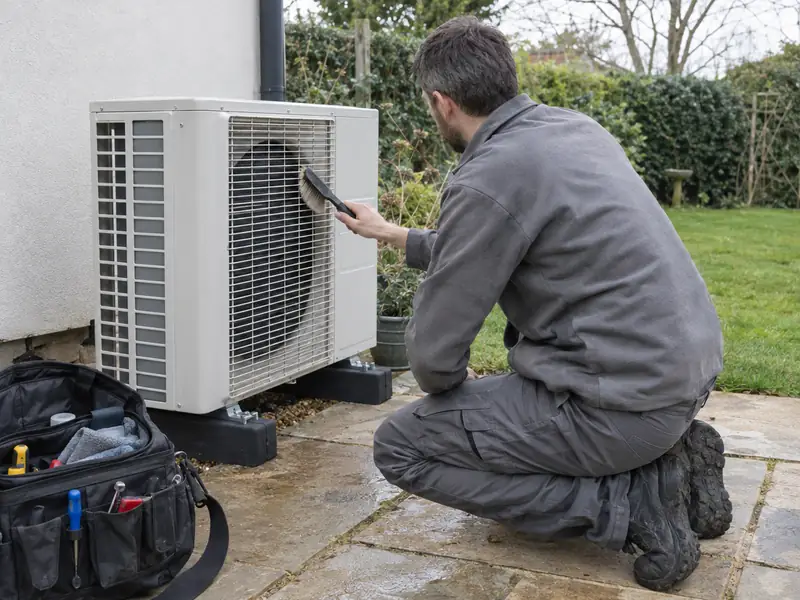
- Cleaning of the outdoor unit coil, fan area and condensate drain
- Glycol or antifreeze protection test where fitted
- Controls and error log check, with settings adjusted where needed
- Expansion vessel, pressure relief and water quality checks
If a heat pump in Fishguard has not been serviced for a while, the first visit includes a full check of settings and pressures.
Grants and rules for heat pumps in Wales
In Wales the Boiler Upgrade Scheme gives £7,500 towards an air source heat pump (£9,000 if it replaces oil or LPG, from 21 July 2026 to 31 March 2027; £2,500 for air-to-air). The MCS-certified installer named in your quote applies to Ofgem for you, and the grant comes off your Fishguard quote.
What to budget for heat pump servicing in Fishguard
Guide prices for Dyfed, including VAT. We agree the visit rate before anyone attends, so there are no surprises on the day.
| Visit | Guide price |
|---|---|
| Annual heat pump service | £120–£250 |
| Fault-finding visit (first hour) | £90–£180 |
Inc VAT. The rate for your visit is confirmed before booking.
Designing for Fishguard's winters
On the shortest day Fishguard gets about 7 hours 44 minutes of daylight, with the noon sun around 15° up. The heating season runs from autumn into spring, so a heat pump that is sized correctly and set up with weather compensation does most of its work in steady, cool conditions.
What happens when you book in Fishguard?
- Book a service and tell us roughly how old the system is.
- An engineer visits your Fishguard home and works through the service checklist.
- You receive a written record of the service and any recommendations.
- If a repair is needed, it is priced in writing before any work goes ahead.
Heat pump servicing in Fishguard: questions
Do you also cover Haverfordwest?
Yes. We arrange heat pump servicing and repairs in Haverfordwest, which is about 13 miles south of Fishguard, and across Dyfed.
What should I check before booking a visit in Fishguard?
Note any error code on the controller, check the system pressure gauge if you have one, and make sure the outdoor unit is clear of leaves or snow. Photos of the unit and controller help.
How often should a heat pump in Fishguard be serviced?
Once a year is the usual recommendation, and many manufacturers make annual servicing a condition of the warranty. Check your warranty terms for the exact requirement.
How often should a heat pump be serviced?
Once a year is the usual recommendation for air source heat pumps, and many manufacturers require it as a warranty condition. An annual visit cleans filters and strainers, checks pressures and controls, and tests the unvented cylinder's safety devices. If you notice a drop in performance, unusual noises or repeated error codes between services, arrange a visit sooner.
Do I need to do anything between services?
A little. Keep the area around the outdoor unit clear of leaves, snow, plants and stored items so air flows freely. Check the system pressure gauge occasionally if you have one, and note any error codes. Avoid covering the unit or building an enclosure around it without advice, as this can reduce performance.