
- Area
- Glasgow and Dunbartonshire
- Postcode district
- G2
- Nation
- Scotland
- Guide price
- From £2,400 inc VAT
- Survey
- Free for installation enquiries
Air-to-air heat pumps in Glasgow: what to expect
A heat pump suits most Glasgow homes, but the details decide how efficiently it runs. Our survey looks at insulation, radiators and hot water use room by room.
For terraced homes in Glasgow, the outdoor unit can often sit in a rear yard with tidy pipe runs to each room. Flats in Glasgow on storage or panel heaters can often switch to air-to-air without fitting radiators or pipework.
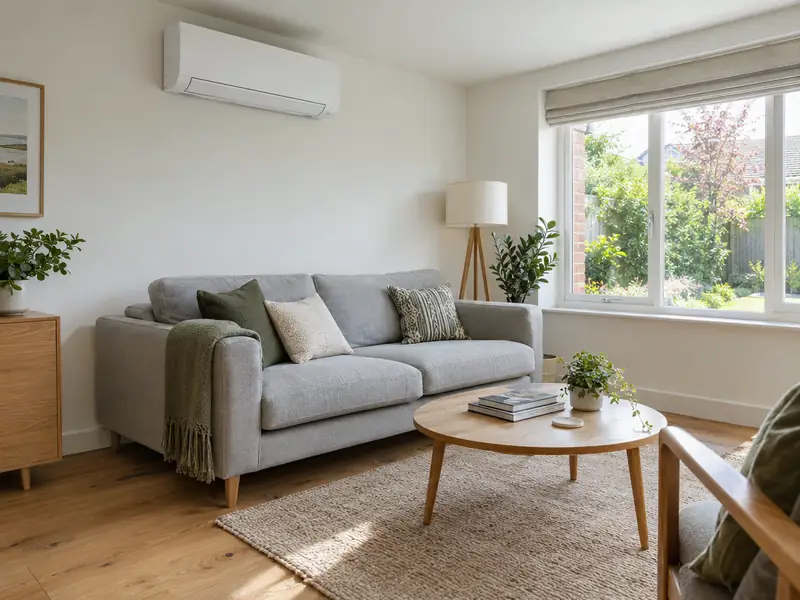
An air-to-air heat pump warms rooms directly with air, and can cool them in summer, but it does not heat your hot water.
- Homes where fitting radiators and pipework would be very disruptive
- Extensions, conservatories and garden rooms
- Rooms that get too hot in summer as well as cold in winter
What's included
- Free survey covering rooms to heat, unit positions and hot water options
- Refrigerant pipe runs to each indoor unit, made and charged by an F-gas certified engineer
- Condensate drains and neat external pipe covers
- Outdoor unit and indoor units for each room
- Electrical supply and controls set up for each room
Top-floor rooms in Glasgow that overheat in summer gain from the cooling an air-to-air system provides.
Grants and rules for heat pumps in Scotland
In Scotland, heat pump funding comes through Home Energy Scotland rather than the Boiler Upgrade Scheme: a grant of up to £7,500 (up to £1,500 extra for eligible rural and island homes) and an optional interest-free loan of up to £7,500. For a Glasgow home, apply and receive the written offer before the installation date is fixed.
There is no VAT on installing a heat pump anywhere in the UK, Scotland included, until 31 March 2027. Scottish permitted development rules and building standards apply, and the surveyor checks the unit position and any listed or conservation-area constraints.
Air-to-air heat pumps prices in Glasgow
Here are typical prices for air-to-air heat pumps in Glasgow and Dunbartonshire, installed and including VAT. Use the guide price tool for a figure based on your home, then a survey confirms it in writing.
| System | Installed guide price |
|---|---|
| Air-to-air heat pump, 1–2 rooms | £2,400–£5,000 |
| Air-to-air heat pump, multi-room 3–4 bedroom home | £4,000–£8,000 |
Installed, inc VAT. Air-to-air systems heat (and can cool) rooms but do not provide hot water.
Short winter days in Glasgow and what they mean
On the shortest day Glasgow gets only about 6 hours 59 minutes of daylight, with the sun around 11° up at noon. Long Scottish winters mean the heat pump runs for much of the year, so careful sizing, good controls and correctly sized radiators make a real difference.
From survey to switch-on in Glasgow
- Tell us about your home: postcode, property type and current heating.
- We book a survey in Glasgow; the surveyor measures rooms, windows and radiators and looks at cylinder space.
- The design and quote arrive in writing, including radiator changes and the outdoor unit position.
- On installation days the old system is removed and the new one fitted and filled.
- We commission the heat pump, show you the controls and register the installation.
Air-to-air heat pumps in Glasgow: questions
What size heat pump does a Glasgow home need?
It depends on the heat loss, not the postcode. As a rough guide, a 3 bedroom semi often needs 6–9 kW, but the room-by-room survey sets the actual size for your Glasgow home.
Can you service a heat pump in Glasgow that someone else installed?
Yes. We arrange servicing and repairs for most air source heat pumps in Glasgow, whoever fitted them. Tell us the make and model when you book.
How long does installation take in Glasgow?
Most installations take 2–4 days on site. Jobs with several radiator changes or new pipework take longer, and your quote for a Glasgow home states the expected time.
Can air-to-air heat pumps cool as well as heat?
Yes. Most air-to-air systems can reverse their cycle to cool and dehumidify rooms in summer, which makes them useful for loft rooms, south-facing extensions and home offices that overheat. Cooling uses electricity, so running costs rise if it is used heavily. You control heating and cooling for each room separately.
How much sound do the indoor units make?
Indoor units are designed to run quietly, with a fan you will hear most when heating or cooling at full output. Lower fan settings and night modes reduce sound in bedrooms. Siting matters for the outdoor unit too: it needs airflow and a position that passes the MCS noise assessment. Ask to see the sound levels of the proposed units at survey.