
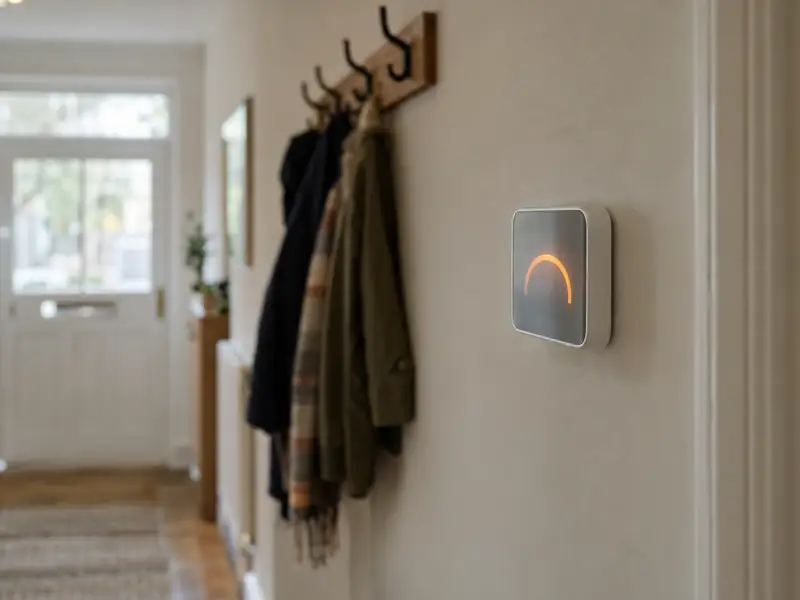
The way a heat pump's controls are set up and used has a direct effect on how efficiently it runs and what it costs. The general rule is to let it run steadily at the lowest flow temperature that keeps your home comfortable, guided by weather compensation, rather than switching it on and off like an old boiler.
This guide explains the main controls, how to schedule hot water, how smart and time-of-use tariffs work in general terms, and the common mistakes that push running costs up. Your installer sets the system up at commissioning and shows you how to adjust it, so you do not need to be an engineer to run it well.
What is weather compensation?
Weather compensation is a control that measures the outdoor temperature and automatically adjusts the temperature of the water sent to your radiators or underfloor heating.
On a mild day the heat pump sends cooler water, towards the bottom of the typical 35–50°C range; on a freezing day it sends warmer water, towards the top of its design range. The link between outdoor temperature and flow temperature is set as a heating curve. A heat pump is more efficient the lower the flow temperature, so a well-set curve keeps it working efficiently for most of the year.
The curve is set at commissioning from your heat loss calculation, then fine-tuned. If rooms are too cool in cold weather, the curve is raised slightly; if they are too warm, it is lowered. Small changes, made one at a time and left for a few days, work most reliably.
Why is 'low and slow' heating more efficient?
'Low and slow' means running the heat pump for long periods at a low flow temperature, which uses less electricity than heating the house quickly with hotter water for a few hours.
A heat pump's efficiency falls as the water temperature it has to produce rises. Running for longer at a lower temperature delivers the same heat for less electricity. It also avoids short cycling, where the unit starts and stops frequently, which wastes energy and adds wear.
In practice, many households leave the heating on through the day with the house held at a steady temperature. A small setback at night, of a degree or two, suits many homes; a large drop usually does not, because the system then has to run hot in the morning to recover.
How should thermostats and zoning be set up?
With a heat pump, the room thermostat usually acts as a limit or fine adjustment, while weather compensation does most of the work of controlling temperature.
- Room thermostat. Set it to the temperature you want and leave it. Turning it up does not heat the house faster; it just raises the target.
- Thermostatic radiator valves. Leave them fully or mostly open in the main living areas, so the system has enough radiator surface to deliver its heat. Turn them down only in rooms you want cooler, such as a spare bedroom.
- Zoning. Separate zones, such as upstairs and downstairs, can help in some homes, but lots of small zones can cause short cycling. One or two zones often run more efficiently.
- Load compensation. Some controls also adjust flow temperature using the indoor temperature, often alongside weather compensation.
Your installer explains which controls your system has at handover. See heat pump controls and tariffs for the options we fit.
When should a heat pump heat the hot water?
Hot water is usually scheduled for one or two set times a day, chosen to fit your routine and, if you have one, the cheaper periods on a time-of-use tariff.
A heat pump heats a hot water cylinder rather than heating water on demand like a combi boiler. Stored water is commonly set to around 45–50°C, which is enough for most households and keeps efficiency up. Heating water in the afternoon, when outdoor air is usually warmest, can make the heat pump slightly more efficient; heating it during a cheaper tariff period can lower the cost.
Most systems also run a legionella cycle, usually weekly, which raises the stored water to around 60°C to keep the cylinder hygienic. Scheduling it in a cheaper period makes sense. Avoid relying on the immersion heater for everyday hot water, because it turns electricity into heat one for one, while the heat pump delivers several units of heat for each unit of electricity.
How do smart tariffs work with a heat pump?
A smart or time-of-use tariff charges different electricity prices at different times of day, so you can run more of your heating and hot water when electricity is cheaper.
Some suppliers offer tariffs aimed at heat pump owners, with cheaper rates for part of the day or for the electricity the heat pump uses. You normally need a smart meter, and some tariffs need compatible controls. Terms change often, so compare them with your own usage before switching.
For context, under the Ofgem price cap for October to December 2026 (Great Britain average, Direct Debit; the cap does not cover Northern Ireland), electricity costs 26.32p per kWh and gas 7.97p per kWh. A heat pump with a seasonal efficiency (SCOP) of 3.0 delivers heat for about 8.8p per kWh, or about 7.5p at SCOP 3.5, compared with about 8.9p per kWh of heat from a 90% efficient gas boiler. A cheaper tariff rate lowers the heat pump figure further, but the result depends on your insulation, flow temperature and how much of your use falls in the cheaper periods.
Making good use of a cheaper period might mean heating the cylinder overnight, or warming the house slightly before a peak period and letting it coast. Solar panels can add to this; see heat pumps with solar PV.
What common mistakes push heat pump running costs up?
The most common mistakes come from treating a heat pump like a gas boiler: switching it off and on, running hot water through the radiators and closing valves.
| Mistake | Why it costs more | What to do instead |
|---|---|---|
| Turning the heating off at night or when out | The system has to recover at a high flow temperature, which is less efficient | Leave it on, with at most a small setback |
| Setting a high flow temperature | Efficiency drops as water temperature rises | Use weather compensation and lower the curve until rooms are just comfortable |
| Closing radiator valves in main rooms | Less radiator surface means hotter water is needed for the same heat | Leave valves open in living areas |
| Using boost or the immersion often | Direct electric heating uses much more electricity per unit of heat | Schedule hot water at sensible times instead |
| Turning the thermostat right up | It does not heat faster and can cause overheating | Set the temperature you want and leave it |
| Ignoring error messages | Faults can quietly reduce efficiency | Ask for a check, and keep up annual servicing |
If your bills look higher than expected, the settings are the first thing to check. An engineer can look at the heating curve, schedules and flow temperatures during a service.
Questions
Should I turn my heat pump off when I go out?
For short absences, usually not. Turning a heat pump off lets the house cool, and the system then has to run at a higher flow temperature to recover, which is less efficient. Leaving it on with a small setback is normally more economical. For longer trips, many systems have a holiday mode that keeps the house and pipework protected from frost.
What flow temperature should my heat pump run at?
Most well-designed systems run at around 35–50°C, depending on the weather and the size of your radiators or underfloor heating. Weather compensation sets it automatically, lower on mild days and higher in cold weather. The lowest flow temperature that keeps your rooms comfortable is the most efficient setting for your home.
Do I need a special tariff for a heat pump?
No. A heat pump works on any electricity tariff. A time-of-use or heat pump tariff from some suppliers can lower running costs if you can shift heating and hot water into cheaper periods, and you usually need a smart meter. Compare the terms with your own usage, because the benefit varies from home to home.
Can I control my heat pump from my phone?
Many heat pumps and controllers come with an app that lets you change temperatures, schedules and hot water settings, and see how much energy the system is using. Whether yours does depends on the make and model. Your installer shows you the controls at handover and sets sensible schedules to start with.
Sources
Scheme figures and price cap rates checked October 2026.