
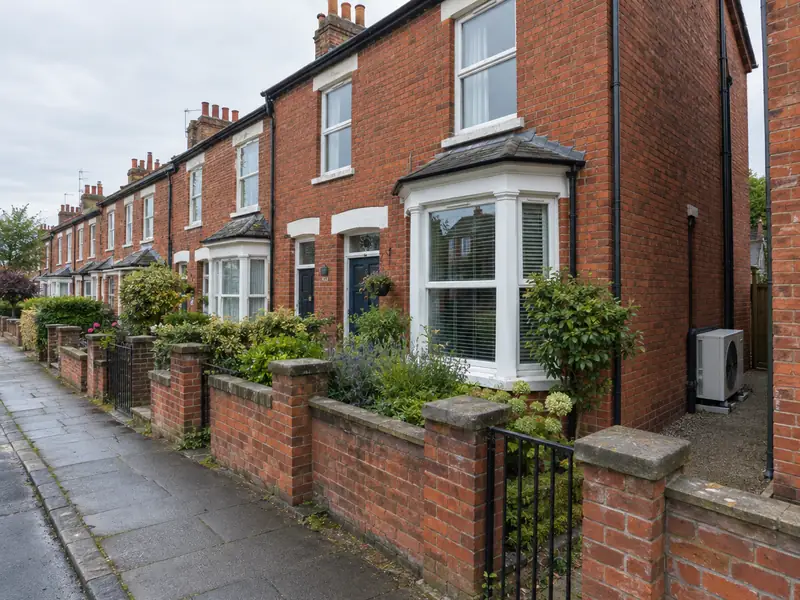
Most of the practical work is about people. Tenants need notice of the installation days, access to rooms where radiators change and a simple explanation of how to use the controls. We plan the installation in stages where possible, keep the time without heating and hot water as short as practical, and provide handover notes written for tenants.
Shared houses in Dumfries and Galloway usually need larger hot water storage to cope with busy mornings. Terraced rental homes in Dumfries and Galloway often have small yards, so outdoor unit siting is checked carefully at survey. For tenanted homes in Dumfries and Galloway, installation dates and access are agreed in writing before work starts.
Who it suits
- Landlords who want to remove gas appliances from a property
- HMOs with high hot water demand that need careful cylinder sizing
- Portfolio landlords planning upgrades across several properties
- Properties between tenancies, when access and disruption are easier to manage
Grants and rules for heat pumps in Scotland
The Boiler Upgrade Scheme does not apply in Scotland. Instead, homeowners in Dumfries and Galloway can apply to Home Energy Scotland for a grant of up to £7,500 towards a heat pump, with up to £1,500 more for eligible rural and island homes, plus an optional interest-free loan of up to £7,500. You need a written funding offer before any work starts.
There is no VAT on installing a heat pump anywhere in the UK, Scotland included, until 31 March 2027. Scottish permitted development rules and building standards apply, and the surveyor checks the unit position and any listed or conservation-area constraints.
Heat pumps for landlords prices in Dumfries and Galloway
The ranges below are typical installed prices for homes in Dumfries and Galloway, including VAT. A survey sets the exact figure, because two similar-looking houses in Dumfries and Galloway can need quite different radiators and pipework.
| Home | Typical size | Installed guide price |
|---|---|---|
| 1–2 bedroom flat or small terrace | 4–5 kW | £9,700–£12,750 |
| 2–3 bedroom terrace or semi | 5–7 kW | £10,700–£13,750 |
| 3 bedroom semi or small detached | 6–9 kW | £12,250–£15,800 |
| 4 bedroom detached | 8–12 kW | £14,300–£18,350 |
| 5+ bedroom or larger older house | 11–16 kW | £16,850–£22,950 |
Installed, inc VAT: unit, cylinder, controls, minor pipework and commissioning. In Scotland, Home Energy Scotland grants of up to £7,500 and interest-free loans may reduce the cost.
Towns we cover in Dumfries and Galloway
We cover 8 towns in Dumfries and Galloway for landlords and let properties. Each links to local guide prices and the grant position for Scotland.
| Town | Postcode district | Nearest town | Midwinter daylight |
|---|---|---|---|
| Dumfries | DG1 | Lockerbie | 7 h 09 min |
| Annan | DG12 | Lockerbie | 7 h 10 min |
| Castle Douglas | DG7 | Dalbeattie | 7 h 11 min |
| Dalbeattie | DG5 | Castle Douglas | 7 h 11 min |
| Kirkcudbright | DG6 | Castle Douglas | 7 h 12 min |
| Lockerbie | DG11 | Annan | 7 h 08 min |
| Newton Stewart | DG8 | Kirkcudbright | 7 h 10 min |
| Stranraer | DG9 | Newton Stewart | 7 h 11 min |
Landlords and let properties questions
Do tenants need training to use a heat pump?
Not training, but a clear explanation helps. Heat pumps are designed to run steadily, with radiators feeling warm rather than hot, so tenants used to boilers may be tempted to switch them off. We provide a handover sheet written for tenants covering the controls, hot water times, what to do if an error appears and why the unit should stay on.
Can I install a heat pump while tenants are living in the property?
Yes. Most installations typically take 2–4 days on site, with heating and hot water off for part of that time. We agree dates and access with you, provide written details to pass to tenants, and plan the changeover to keep downtime short. Preparing the outdoor unit and cylinder first shortens the period without heating.
Can a heat pump go on a block of flats or an HMO?
Often, yes, but it needs more planning. In flats, the outdoor unit position and pipe routes usually need freeholder or management company consent, and some positions need planning permission depending on the nation, which we check at survey. In HMOs, hot water demand is higher, so cylinder sizing is critical. Larger buildings may suit a commercial design instead.