
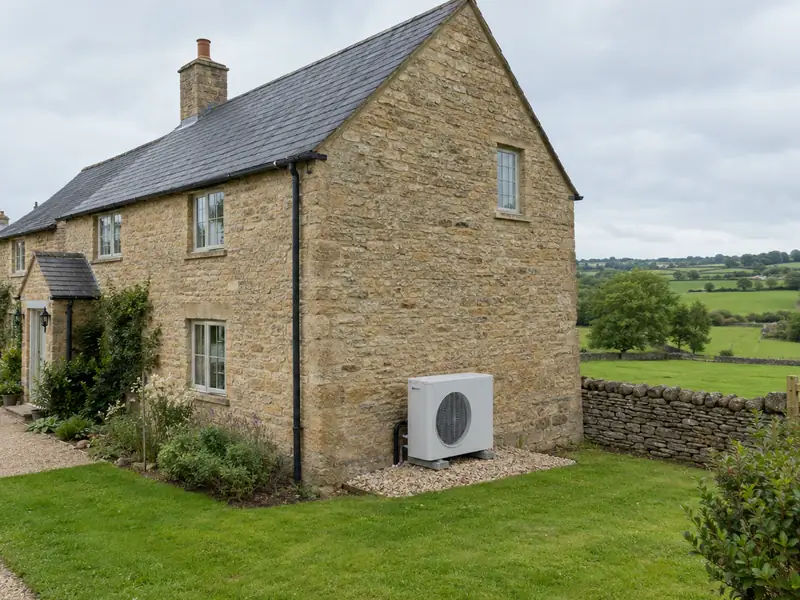
An air source heat pump can replace an oil or LPG boiler in most off-gas homes, heating your radiators and hot water from electricity instead of delivered fuel. It needs a proper heat loss calculation, radiators that work at a low flow temperature and a suitable spot outside for the unit.
In England and Wales the Boiler Upgrade Scheme pays a higher grant of £9,000 when a heat pump replaces oil or LPG heating and is installed between 21 July 2026 and 31 March 2027. Scotland has its own grant with an uplift for eligible rural and island homes, and Northern Ireland has no dedicated heat pump grant at present. This guide covers the grants, what happens to your tank, how older rural houses are handled and how running costs compare.
Can a heat pump replace an oil or LPG boiler?
Yes. In most homes an air source heat pump can replace an oil or LPG boiler, provided the system is sized from a room-by-room heat loss calculation and the radiators can deliver enough heat at a low flow temperature.
Off-gas homes often suit heat pumps in practical ways. There is usually outdoor space for the unit, removing the tank frees up room, and there are no more fuel deliveries to arrange. A hot water cylinder is needed; many oil systems already have one, though it is usually replaced with a cylinder designed for a heat pump.
The main questions at survey are the home's heat loss, the size of the radiators, the electrical supply and where the outdoor unit can go. See oil and LPG boiler replacement.
What grants are there for replacing oil or LPG in each nation?
Grant support for replacing oil or LPG heating with a heat pump depends on which nation your home is in.
| Nation | Support for replacing oil or LPG | Key conditions |
|---|---|---|
| England and Wales | Boiler Upgrade Scheme: £9,000 for installations from 21 July 2026 to 31 March 2027; the standard grant is £7,500 | The MCS-certified installer applies to Ofgem and deducts the grant from your quote |
| Scotland | Home Energy Scotland grant of up to £7,500, plus up to £1,500 more for eligible rural and island homes; optional interest-free loan of up to £7,500 | Written funding offer needed before work starts; funding is first come, first served |
| Northern Ireland | No dedicated heat pump grant for homeowners at present | Heat pumps have sometimes been funded through the Northern Ireland Sustainable Energy Programme |
Across the UK the installation of a heat pump is zero-rated for VAT until 31 March 2027. Guide prices for a full system, such as £12,000–£15,500 installed including VAT for a three-bedroom home, are before any grant is deducted.
What happens to my oil tank or LPG tank?
An old oil tank is usually drained, cleaned and removed, or made safe and left in place, while a bulk LPG tank is normally collected by the supplier that owns it.
Oil tanks. Any remaining oil is pumped out, the tank and pipework are cleaned, and the tank is removed or decommissioned in place where removal is not practical. Waste oil and contaminated material must be handled by a licensed waste carrier. It helps to run the tank as low as you can before installation, without running out while you still need heating.
LPG tanks. Bulk LPG tanks are usually owned by the supplier under a contract. Contact them early to end the agreement and arrange collection, and check your contract for notice periods and any charges. LPG bottles go back to the supplier.
Tell the surveyor whether you want tank removal included. Your quote makes clear what is covered and what is arranged separately.
Are older rural houses suitable for a heat pump?
Older rural houses can be suitable for a heat pump, but they often lose heat faster than modern homes, so careful sizing, larger radiators and sensible insulation upgrades matter more.
Solid stone or brick walls, single glazing, suspended timber floors and draughts all raise heat loss. The heat loss calculation shows where the heat goes and how big the heat pump needs to be. Simple measures such as loft insulation and draught-proofing can reduce the size of unit needed and improve comfort.
- Radiators. Some may need to be larger to work at a low flow temperature; a heat-pump radiator has a guide price of £250–£450 each, fitted, including VAT.
- Pipework. Old or undersized pipework may need upgrading, with a guide price of £1,500–£3,500, installed including VAT.
- High-temperature units. Where larger radiators are not practical, a high-temperature heat pump can help, at a guide price of £1,500–£3,000 extra over a standard unit, installed including VAT.
- Electrical supply. The surveyor checks the supply and fuse board, and the installer notifies the electricity network operator where required.
- Listed buildings. In England, listed homes need listed building consent for a heat pump; in Wales, Scotland and Northern Ireland we check what applies at survey.
The heat pumps in older homes guide goes into more detail.
How do heat pump running costs compare with oil and LPG?
Whether a heat pump costs less to run than oil or LPG depends on fuel prices at the time, your home's insulation, the flow temperature the system runs at and your electricity tariff.
Oil and LPG are not covered by the Ofgem price cap and their prices can move sharply, so the fairest comparison uses your own recent bills. Work out what you spend on heating and hot water in a year, then compare it with an estimate for the heat pump based on your heat loss calculation.
For the heat pump side, under the Ofgem price cap for October to December 2026 (Great Britain average, Direct Debit), electricity is 26.32p per kWh. At a seasonal efficiency (SCOP) of 3.0, that delivers heat for about 8.8p per kWh, or about 7.5p at SCOP 3.5, and a heat pump tariff from some suppliers can lower this further. Electricity prices in Northern Ireland are not set by the Ofgem cap, so homes there should compare using their own tariff.
There are practical differences too: no fuel deliveries to arrange, no tank to check and no risk of running out in a cold spell. The heat pump still needs an annual service.
How does the switch from oil or LPG work in practice?
Switching from oil or LPG follows the same steps as any heat pump installation, with the tank and fuel supply dealt with as part of the job.
- A free home survey and heat loss calculation
- Design and a written quote, with the grant deducted where one applies
- In Scotland, waiting for the written Home Energy Scotland offer before work starts
- Using up as much fuel as practical before installation day
- Installation, typically 2–4 days on site, longer if radiators or pipework change
- Removing the old boiler, and emptying, removing or decommissioning the tank as agreed
- Commissioning, handover and an MCS certificate
See the installation process guide for each step in detail.
Questions
Does the higher oil and LPG grant apply in Scotland?
No. The higher Boiler Upgrade Scheme grant of £9,000 covers England and Wales only, for installations from 21 July 2026 to 31 March 2027. In Scotland, Home Energy Scotland offers its own grant of up to £7,500, plus up to £1,500 more for eligible rural and island homes. You must have a written offer before work starts.
Can I keep my oil boiler as a backup?
Keeping an oil boiler connected alongside a heat pump makes it a hybrid system, which is not eligible for the Boiler Upgrade Scheme in England and Wales. To claim that grant, the heat pump must meet the home's full heating and hot water needs. A correctly sized heat pump is designed to keep working well below freezing, so a backup boiler is not normally needed.
Who removes the old oil tank?
Oil tank removal is usually carried out by a specialist who drains any remaining oil, cleans the tank and takes it away, with waste handled by a licensed waste carrier. It can be arranged alongside your heat pump installation. Your quote makes clear whether tank removal is included or arranged separately.
Will I need a bigger electricity supply?
Most homes can run a heat pump on their existing supply, but the surveyor checks your supply, main fuse and fuse board. The installer notifies the electricity network operator where required, and in some cases the network operator may need to upgrade the supply. Any such work is identified before your quote is finalised.
Sources
- Apply for the Boiler Upgrade Scheme – GOV.UK
- Boiler Upgrade Scheme – Ofgem
- Home Energy Scotland
- Air source heat pumps – Energy Saving Trust
- NI Direct
Scheme figures and price cap rates checked October 2026.