
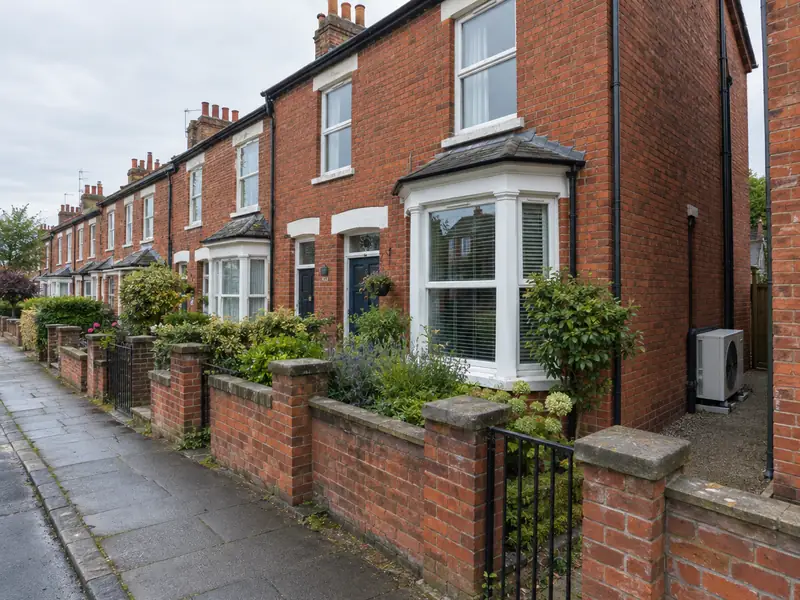
We cover 8 towns and cities in the Scottish Borders, including Duns, Eyemouth, Galashiels and Hawick. Every installation is designed from a room-by-room heat loss calculation, so the heat pump, radiators and cylinder are sized for the house rather than guessed.
Towns we cover in the Scottish Borders
Heat pump services in the Scottish Borders
Grants and rules for heat pumps in Scotland
In Scotland, heat pump funding comes through Home Energy Scotland rather than the Boiler Upgrade Scheme: a grant of up to £7,500 (up to £1,500 extra for eligible rural and island homes) and an optional interest-free loan of up to £7,500. For a home in the Scottish Borders, apply and receive the written offer before the installation date is fixed.
There is no VAT on installing a heat pump anywhere in the UK, Scotland included, until 31 March 2027. Scottish permitted development rules and building standards apply, and the surveyor checks the unit position and any listed or conservation-area constraints.
Guide prices in the Scottish Borders
| Home | Typical size | Installed guide price |
|---|---|---|
| 1–2 bedroom flat or small terrace | 4–5 kW | £9,700–£12,750 |
| 2–3 bedroom terrace or semi | 5–7 kW | £10,700–£13,750 |
| 3 bedroom semi or small detached | 6–9 kW | £12,250–£15,800 |
| 4 bedroom detached | 8–12 kW | £14,300–£18,350 |
| 5+ bedroom or larger older house | 11–16 kW | £16,850–£22,950 |
Installed, inc VAT: unit, cylinder, controls, minor pipework and commissioning. In Scotland, Home Energy Scotland grants of up to £7,500 and interest-free loans may reduce the cost.
Questions
Which electricity tariff suits a heat pump?
A heat pump tariff or time-of-use tariff can lower running costs by charging less for electricity at certain times or for heat pump use. Some suppliers offer them, and the right one depends on when your heating and hot water run and whether you have a smart meter, battery or solar panels. Smart controls can heat the cylinder during cheaper periods. We explain the options at handover without recommending a particular supplier.
Where will the outdoor unit go?
The outdoor unit goes where it has free airflow, a solid base or wall brackets, a short pipe run to the house and somewhere for condensate water to drain. A typical unit is roughly 1 m wide. We also keep it away from neighbours' windows where possible, because siting and the MCS noise check both matter. Common positions are a side wall, back garden or yard, and we agree the spot with you at survey. See noise and siting.
Why do my radiators feel cooler with a heat pump?
Radiators run at a lower temperature with a heat pump, so they feel warm rather than hot, but your rooms still reach the temperature you set. The heat pump delivers heat steadily over longer periods instead of in short, hot bursts. Correctly sized radiators and a flow temperature of around 35–50°C give comfortable, even warmth. If a room feels cold, the controls or a radiator size may need adjusting, which we can check.
How long does an air source heat pump last?
An air source heat pump typically lasts 15–20 years, depending on the model, how it is used and how well it is maintained. Annual servicing helps it run efficiently and is often a condition of the manufacturer warranty. Parts such as pumps, sensors and fans can be replaced during its life. When an outdoor unit reaches the end of its life, a like-for-like replacement is a guide price of £6,000–£9,500, installed and including VAT.